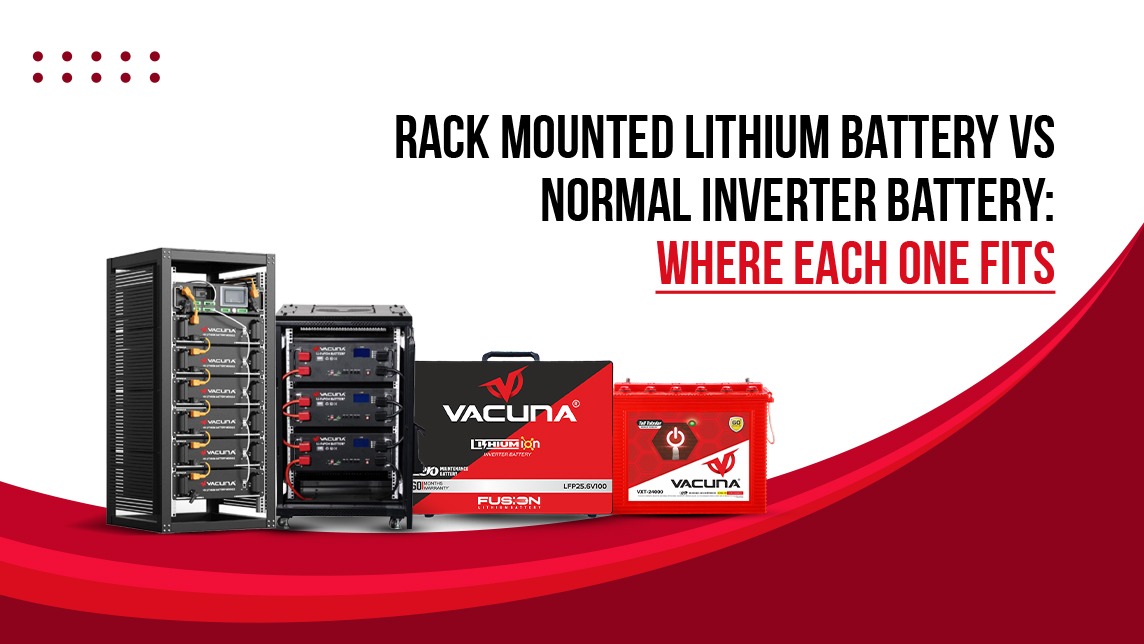
Rack Mounted Lithium Battery Vs Normal Inverter Battery: Where Each One Fits

A normal inverter battery is enough for many homes.

Lights, fans, Wi-Fi, TV, and basic backup — it can handle these if the battery and inverter are matched properly.

But once the backup need becomes cleaner, heavier, or more business-critical, the normal setup starts showing its limits. Wires get messy. Battery space becomes an issue. Charging takes time. Maintenance becomes a regular job. And if the setup is used for office systems or UPS backup, the risk becomes bigger.

That is where a Rack Mounted Lithium Battery makes more sense.

Both options have their place. The point is not that one is good and the other is bad. The real question is: where will the battery be used?

Where A Normal Inverter Battery Works Well

A normal inverter battery works best for basic backup.

For a home, small shop, or small office, it can support daily power cuts if the load is not too heavy. If the main need is lights, fans, router, and a few small devices, this setup is usually simple and practical.

It is also easier for users who want a familiar system and do not need rack-based installation.

But the battery must be sized properly. If the load keeps increasing, backup drops. If ventilation is poor, battery life suffers. If charging is not proper, performance goes down.

So even a simple inverter battery needs correct selection.

Where A Rack Mounted Lithium Battery Fits Better

A Rack Mounted Lithium Battery is better for places where backup has to be organised and dependable.

Think about server rooms, offices, clinics, CCTV rooms, institutions, telecom spaces, and commercial UPS setups. These places do not only need backup. They need clean installation, better space use, faster charging, lower maintenance, and stable power support.

A rack-mounted setup also looks cleaner. Batteries are not lying around in corners. Wiring is easier to manage. The setup can be planned properly.

For business users, this matters.

When power goes off, the system should not become a guesswork game.

Why Lithium Helps In Critical Backup

Lithium batteries solve some daily problems that many users face with older setups.

They charge faster. They need less routine maintenance. They take less space. They also give better usable power when matched correctly with the inverter or UPS system.

For a commercial user, this is useful.

A clinic cannot afford system shutdowns during working hours. A server room needs steady backup. A shop needs billing, CCTV, and internet to stay active. An office needs routers, laptops, and access systems running during outages.

In these cases, a Rack Mounted Lithium Battery can be a better fit than a basic battery setup.

Normal Backup Or Rack Setup: How To Decide

Start with the load.

If the backup is only for home comfort, a normal inverter battery may be enough. If the backup supports important work, customer service, systems, or data, plan more carefully.

Also check space.

If the battery area is already crowded, a rack setup can make the system neater. If future expansion is likely, rack-mounted lithium gives better planning.

Then check the equipment.

A Lithium Ion Battery for Inverter may work well for home and light commercial use. A lithium battery for UPS may suit offices, clinics, and IT setups. A Lithium Battery Inverter setup may be useful where users want a more compact and modern backup system.

The right choice depends on load, runtime, site space, charging source, and future use.

What Buyers Should Check Before Installing

Do not buy a battery only by capacity.

Check these points first:

What load needs backup?
How long should the backup run?
Is it for inverter, UPS, or solar storage?
Is rack space available?
Does the system need future expansion?
Is service support available?
Does the battery have proper BMS protection?

For buyers looking at a lithium battery inverter in India, this step is important. The battery, inverter, charger, and load should work together. If one part is mismatched, the full system suffers.

Where Vacuna Fits In

At Vacuna, the focus is on practical battery selection.

A home user does not need the same setup as a server room. A clinic does not need the same backup as a small shop. A UPS room does not work like a regular home inverter corner.

That is why battery choice should begin with the actual use.

For clean commercial backup, a Rack Mounted Lithium Battery gives a more organised option. For simpler backup, a normal inverter battery may still be enough.

Final Thoughts

A normal inverter battery is useful for basic backup.

A Rack Mounted Lithium Battery is better when backup becomes more serious, organised, and space-sensitive.

The choice should not be made only by price. It should be made by looking at load, space, charging time, maintenance, safety, and how important the backup is.

If the power cut only causes discomfort, a basic setup may work.

But if the power cut stops work, billing, data, security, or patient handling, the backup system needs better planning.

Why One Battery Type Cannot Work For Inverter, Solar, E-Rickshaw, And Automotive Use

The common perception among many purchasers is that a battery is a battery; if the battery’s voltage and dimensions seem fine, it will be fine everywhere else as well. This is far from how the battery operates in practice.

The battery required for inverter power backup will operate under different loads than the battery powering an e-rickshaw. The battery for a solar panel works differently from the battery for automotive purposes. A lithium inverter battery is not chosen the same way a normal lead acid battery would be.

This is where the importance of a good battery manufacturer in India comes in. It needs to take into consideration how and where the battery will be used, rather than recommend a battery for everything. At Vacuna, the battery selection process begins with a single simple question – “Where?”

Inverter Batteries Need Stable Backup

In the event of power failures, the inverter battery must cater to the needs of houses, commercial establishments, offices, small business organizations, and so forth. There can be any number of electrical equipment that would be running from the battery, including fans, lights, WiFi, cameras, computers, billing software, etc. There is a need to have the battery cater to the backup needs as well as getting recharged whenever there is a sudden availability of electrical current in sufficient quantities. If the battery is not adequate, the battery keeps discharging continuously.

Lithium-ion batteries for inverter make perfect sense if one wants efficient charging, minimum maintenance, and backups. But even then, the choice of lithium batteries will depend upon several other considerations as well.

Solar Batteries Work In Daily Cycles

The task of solar batteries is quite different from other types of batteries. They charge during daytime and discharge when the stored electricity is used at night. Such a daily cycle implies that a solar battery must have high charge acceptability and ability to work in cycles. It is important to consider such factors as appropriate sizing of solar batteries as well.

If the battery does not suit solar power systems, then no matter how efficiently the panels work, there will be issues with backup loss, charging inconsistencies, and the entire solar power system will be to blame. It is important to provide customers with a reliable Solar Battery Supplier In UP, which will ensure compatibility between battery capacity, inverter, loads, and backup requirements. Solar power systems are not only about panels but also about battery performance.

E-Rickshaw Batteries Need Running Strength

The battery of an e-rickshaw is like a financial partner to the owner. This is because the battery will transport people, will carry load on the road, will frequently stop and start, and will run for many hours. Failure to use a secondary battery means loss of money from lost transportation while excessive charging time means wastage of working hours.

The battery which performs well in the case of home power cannot simply be adopted to serve the purpose of an e-rickshaw battery. There are many factors that come into play. These include passenger load, road conditions, how the battery is charged, and working hours.

Automotive Batteries Need Starting Power

The other purpose of the automotive batteries is that they must be capable of producing a high surge of energy for the purpose of engine start up. This means that it is not the same as providing extended backup like the inverter battery. Vehicles, especially cars, trucks, commercial vehicles etc. are exposed to various conditions such as heat, vibrations, short drives, prolonged time in parks and frequent engine starts.

An important aspect for an Automotive Battery Manufacturer In Meerut would be the emphasis on cranking power, packaging, terminal configuration, longevity and vehicle suitability. The automotive battery cannot be compared with the solar or inverter battery because of its basic function of starting.

Why Application-Based Selection Matters

Improper choice of the battery leads to problems in future.

The solar customer might encounter problems related to lack of backup.

The inverter consumer may experience battery discharging issues.

The e-rickshaw owner will face issues related to insufficient run time.

The car owner may encounter problems related to start-up difficulties.

However, the issue does not always relate to battery quality alone. It can result from selecting the wrong type of battery for the wrong application. That’s why dealing with a well-informed Battery Supplier In India becomes necessary.

Final Thoughts

No single battery can meet all needs. Inverter batteries need consistent backup. Solar batteries require deep cycles. E-rickshaw batteries require good daily operation. Automotive batteries need good cranking capability. All four have different roles.

At Vacuna, our view is that choosing the correct battery should be rational rather than random. The battery chosen needs to match the usage intended for it in reality. This distinction separates those batteries which only fit into the required space from those that actually deliver good performance.

Why Solar Backup Fails Even When The Panels Are Working Fine

Solar panel is normally the center of attention. There will be focus on the panel size, wattage, available roof area, availability of sunlight, and output that may result. This is normal. But there is a common complaint from almost all solar panel buyers.

The panels are operating well. But the backup is poor. Lights turn off earlier than expected. It takes time to recharge the battery. Backup in the evening period is inadequate. There will be frustration because solar system is not working properly, despite production by the panels. There will be more chances of facing problems due to battery, load, inverter, and inappropriate system sizing rather than the panel itself.

Vacuna focuses on the total process involved in solar backup. The solar panel collects energy. But it depends on the battery how this energy will be helpful in absence of sunlight.

Solar Generation Is Only Half The Story

The solar panels produce electricity during the day when there is sunshine. However, there are different times of the day when residential buildings, commercial buildings, retail spaces, and small businesses require power. Backup power might be required either in the evenings, at nights, or even during power interruptions. This is where the battery comes in.

When the battery size is inadequate, backup duration is reduced fast. When the battery does not have the capacity to support solar usage, it might deteriorate prematurely. If the charging equipment is inadequate, then charging would be difficult. It is important to ensure that one selects an appropriate Solar Battery Supplier In UP.

Wrong Battery Size Creates Daily Backup Problems

One of the main reasons behind the failure of solar backup batteries is due to the battery size. If the battery size is smaller, although initially cost-effective, it would have its lifespan shortened by daily deep discharges. On the other hand, a much larger battery may fail to get fully charged if the size of the solar panel is inadequate.

All such situations would make the user think that there might be some issues with the solar panel. However, the fault does not lie with the solar panel. It lies within the battery. Therefore, the best Solar Battery Supplier In UP should assist users in choosing the right battery for their needs.

Load Planning Is Just As Important

Many solar backup systems are unable to work due to the increase in the load connected. Initially, the system can be designed with lighting, fans, and general electrical gadgets. But after some time, the user connects Wi-Fi, television, CCTVs, lights, computers, billing equipment, and minor tools.

Now, the battery has a much more significant task than anticipated. Reserve power decreases. There will be a high demand for charging capacity in the system. The system appears to be inefficient. Prior to installation or upgrading of any solar backup system, the user should first evaluate his power requirements.

That is where the role of guidance from an experienced Battery Supplier In UAE or India comes in handy.

Solar Batteries Need Deep-Cycle Strength

While a normal backup battery functions only during power outages, a solar battery functions quite often. This is because a solar battery operates by being charged under the sun during the day and discharged at the right times. This process takes place every single day.

This is the reason behind the necessity of excellent deep-cycle performance on the part of a solar battery. People interested in getting a Solar Battery Supplier In UAE must look into factors other than capacity. These include characteristics such as charging capabilities, heat resistance, backup abilities, and maintenance.

It is especially important for places that have high temperatures.

Inverter Matching Should Not Be Ignored

The solar backup also relies on the functionality of the inverter. The performance will be impacted if there is any mismatch in the compatibility between the battery, panels, and inverters. Charging voltage mismatches, compatibility issues, and even overload will reduce the battery’s efficiency.

There needs to be an ideal combination of the panel, inverter, battery, wires, and other components in a solar backup system. From the buyer’s perspective, a responsible Solar Battery Exporter In UAE would be someone who considers the suitability of the products in terms of applications.

Why Vacuna Fits Solar Backup Needs

Vacuna takes an efficient approach towards addressing the demands of solar energy and power back-up systems. The approach is not merely to promote their batteries; the company aims to guide people in choosing appropriate batteries for solar energy storage and inverter back-ups.

Being a Solar Battery Supplier In UP, Vacuna recognizes that the usage of power back-up systems in Indian households and commercial establishments has its own dynamics. Vacuna also caters to the solar battery requirements of international customers through exports.

Final Thoughts

Solar backup failure is not only due to bad panels. Most often, the panel itself is okay. The problem lies in battery capacity, system mismatching, increased load, inverter mismatching, or wrong battery choice.

Solar backup systems work well when all parts complement each other.

The panels generate the energy.

The batteries store energy.

Inverters control energy.

And the consumer uses that power when it really matters. This is the reason why the right Solar Battery Supplier In UAE or UP is essential.

When Backup Becomes Business-Critical: Why A Rack Mounted Lithium Battery Makes Sense

A small power cut at home is irritating.

But in a clinic, office, server room, retail store, or small business, it becomes a different problem. Work stops. Systems shut down. CCTV goes off. Billing gets delayed. Internet drops. In some places, even a few minutes of power loss can disturb the whole day.

That is where normal backup planning starts falling short.

A basic inverter battery may be enough for fans and lights. But when backup has to support computers, routers, servers, medical systems, billing counters, cameras, or office equipment, the setup needs to be cleaner and more dependable.

This is where a Rack Mounted Lithium Battery becomes useful.

Why Normal Backup Is Not Always Enough

Most businesses start with a simple inverter setup.

At first, it works fine. One battery. One inverter. A few important loads connected.

Then slowly the load grows.

One extra computer. More CCTV cameras. A Wi-Fi router. A printer. A small server. A billing system. Maybe an access control system too.

The battery still runs, but backup starts dropping. Charging takes longer. The setup becomes messy. The owner only notices the problem when power goes off and the system cannot hold the load properly.

For business use, backup should not be planned like guesswork. It should match the load, runtime, charging pattern, and available space.

Where A Rack Mounted Lithium Battery Fits

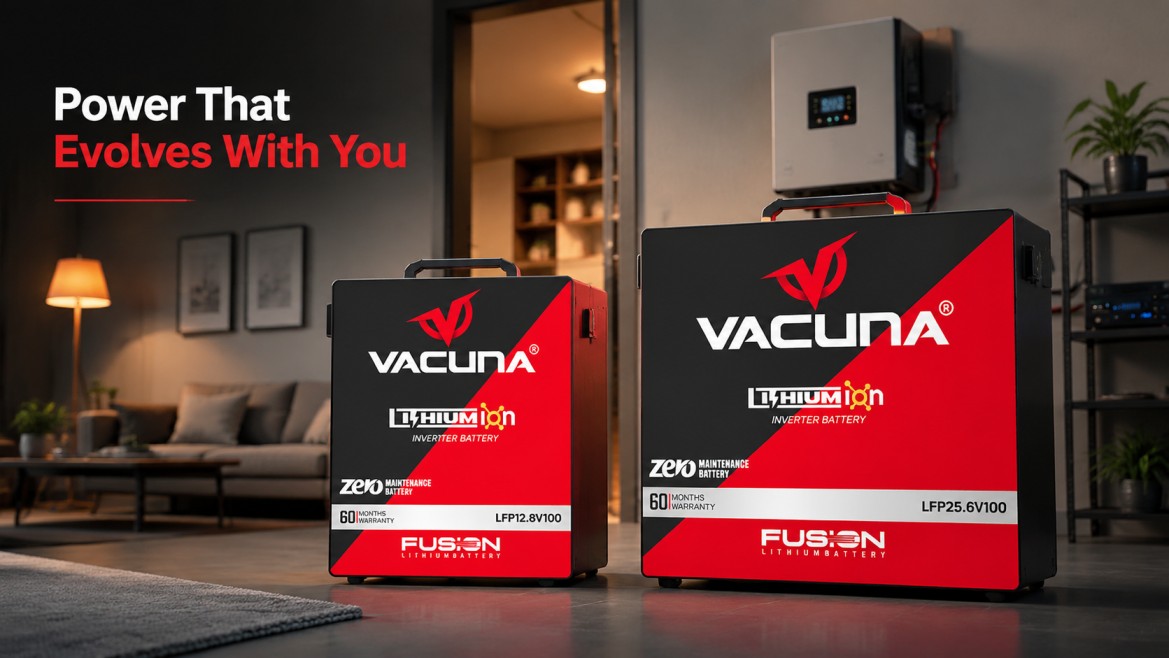
A Rack Mounted Lithium Battery is made for organised backup setups.

It fits neatly into rack systems, which makes it useful for server rooms, offices, commercial UPS systems, telecom rooms, institutions, and business backup areas. Instead of keeping bulky battery boxes in corners, the setup becomes cleaner and easier to manage.

This matters in places where space is limited or where multiple batteries need to be arranged properly.

A rack system also helps when the backup setup grows over time. If the business needs higher capacity later, the system can be planned in a more structured way.

For users looking at a lithium battery for UPS, this kind of setup is much more practical than using random batteries without proper arrangement.

Why Lithium Works Better For Critical Backup

Lithium batteries are not popular only because they sound modern.

They solve real problems.

They charge faster. They need less maintenance. They take less space compared to many traditional battery setups. They also offer better usable capacity when matched properly with the system.

For small offices and clinics, this means fewer backup worries. For server rooms, it means cleaner power planning. For retail stores, it means billing, CCTV, and internet can stay active during short outages.

A Rack Mounted Lithium Battery also makes sense where the battery has to support regular power interruptions without becoming a maintenance headache.

Businesses Need Predictable Backup

A business does not need surprise backup.

It needs predictable backup.

If the power goes out, the owner should know which systems will keep running and for how long. That is only possible when the battery system is selected properly.

Before choosing any lithium backup setup, check these points:

What load needs backup?
How long should the backup run?
Is it for UPS, inverter, or solar storage?
How much space is available?
Will the battery need future expansion?

This is where Vacuna helps users choose based on real use, not just battery size. A Lithium Ion Battery for Inverter may be right for one site. A Lithium Battery Inverter setup may work better for another. For business-critical backup, a Rack Mounted Lithium Battery can be the better choice.

Final Thoughts

Backup becomes serious when power failure affects work.

For homes, basic backup may be enough. But for offices, clinics, server rooms, shops, and institutions, the battery setup needs to be more stable, compact, and easier to manage.

A Rack Mounted Lithium Battery gives businesses a cleaner way to plan backup power. It supports better space use, faster charging, lower maintenance, and organised installation.

At Vacuna, the focus is simple: help users choose lithium power solutions that match the job properly.

Because a good backup system should not only work during a power cut.

It should keep important work from stopping.

What India And UAE Buyers Should Check Before Choosing A Battery Supplier

Choosing a battery supplier is not only about getting stock at the right price.

For dealers, distributors, solar installers, inverter sellers, and commercial buyers, the bigger question is simple: will the battery perform after it reaches the customer?

Because that is where the real test starts.

A battery may look fine in the warehouse. The label may look good. The price may look attractive. But once it goes into a home inverter, solar setup, vehicle, or commercial backup system, weak selection starts showing quickly.

Backup drops.
Warranty complaints increase.
Dealers lose trust.
Customers blame the seller first.

That is why choosing the right Battery supplier in India or Battery supplier in UAE needs more checking than just price and availability.

At Vacuna, we look at battery supply from the usage side first. Where will the battery be used? What load will it support? What weather will it face? Is the buyer looking for lead-acid, lithium, solar, inverter, automotive, or e-rickshaw battery support?

These questions matter.

Check Whether The Supplier Understands The Application

One battery does not fit every job.

A solar battery works differently from an inverter battery. An automotive battery has a different job from an e-rickshaw battery. A lithium inverter battery is not selected the same way as a regular backup battery.

So before choosing a Battery supplier in India, buyers should check whether the supplier understands different applications.

For example, a solar battery needs better charge acceptance and deep-cycle support. An inverter battery should handle regular backup and recharge cycles. Automotive batteries need starting power. E-rickshaw batteries need long running support under load.

A supplier who pushes one type of battery for every use will create problems later.

Hot Weather Performance Matters In UAE And India

Both India and UAE can be tough on batteries.

Heat affects charging, backup life, water loss in lead-acid batteries, and long-term performance. In UAE, this becomes even more important for solar, inverter, and commercial backup use.

So, when choosing a Battery supplier in UAE, buyers should not only ask about price. They should ask how the battery handles hot working conditions, regular load, and long backup demand.

This is especially important for dealers and installers. If the battery fails early at the customer site, the complaint comes back to them.

A good battery supplier should help the buyer choose the right product for the climate and usage.

Solar Buyers Should Check Storage, Not Just Panel Output

Many solar buyers focus too much on panels.

But panels only generate power. The battery decides how useful that power becomes later.

That is why choosing a reliable Solar Battery Supplier in UAE matters. Solar batteries should handle daily charging, evening backup, cloudy days, and regular discharge cycles.

If the battery is not right, the solar system feels weak even when the panels are working properly.

Why Hill Roads Need A Stronger Automotive Battery Than City Driving

A vehicle battery in the hills works harder than people think.

In flat city roads, the battery mostly handles regular starting, lights, horn, and basic electrical load. But in hill areas, the conditions are different. Cold mornings, steep roads, short trips, rough patches, and frequent starts put more pressure on the battery.

That is why choosing the right Automotive Battery Supplier in Uttarakhand matters.

A weak battery may work fine for some time. But once the vehicle starts facing hill roads daily, the signs come out quickly. Slow cranking. Weak self-start. Dim lights. Trouble after parking overnight. Starting problems after short stops.

For drivers in Uttarakhand, a battery should not only fit the vehicle. It should handle the place where the vehicle runs.

Cold Starts Need Better Cranking Power

In hill regions, mornings can be colder than plain areas.

Cold weather makes starting harder. The engine oil becomes thicker. The starter motor needs more power. If the battery is already weak, the vehicle may crank slowly or fail to start.

This is common in cars, jeeps, taxis, small commercial vehicles, and utility vehicles used in hilly routes.

A good automotive battery should provide strong cranking power when needed. It should not struggle every morning or after long parking.

At Vacuna, we look at automotive battery use from the real driving condition first. A battery for hill roads needs reliable starting support, not just a good-looking rating on paper.

Short Trips Can Slowly Drain The Battery

Hill driving often includes short local trips.

Home to market. Market to school. School to office. Taxi stand to hotel. Small routes like these mean the vehicle starts many times but may not run long enough to fully recharge the battery.

Over time, this affects battery health.

The driver may think the battery is faulty, but sometimes the usage pattern itself is stressful. That is why battery selection should match the driving routine.

A reliable Automotive Battery manufacturer in Meerut should understand both city and hilly use. Batteries supplied to regions like Uttarakhand need stable charge recovery and dependable performance under repeated starting conditions.

Rough Roads And Vibration Also Matter

Hill roads are not always smooth.

Potholes, broken patches, sharp turns, and uneven roads create vibration. This affects the battery from inside and outside. Loose terminals, weak fittings, and poor internal construction can create problems over time.

A strong automotive battery should handle vibration better. It should have proper fitment, solid construction, and stable current delivery.

This is especially important for taxis, commercial vehicles, delivery vehicles, and daily-use cars that cannot afford regular starting trouble.

Heat Still Plays A Role

Hill areas are not only about cold weather.

Vehicles also face heat during long climbs, traffic jams, and summer driving. Under-bonnet temperature rises. If the battery quality is weak, heat can reduce life faster.

So the battery has to handle both sides: cold starts and heat stress.

That is why buyers should not choose only by price. They should check battery size, cranking power, warranty, terminal layout, and vehicle requirement.

Final Thoughts

Hill driving puts extra pressure on automotive batteries.

Cold starts, short routes, slopes, vibration, and changing weather all affect performance. A battery that works casually in plain roads may not always handle hilly use well.

For drivers looking for an Automotive Battery Supplier in Uttarakhand, the right choice should be based on real road conditions, not only cost.

Vacuna supports automotive battery needs with this practical view. A good vehicle battery should start the vehicle when needed, handle daily use, and not become a regular roadside problem.

Total Cost of Ownership: Are Lithium Batteries for UPS Worth the Investment?

Most people compare UPS batteries from the bill only. They ask one thing: “What is the price?” That is where the mistake starts.

In real use, the battery cost does not stop at purchase. It keeps showing up later — replacement, service visits, weak backup, battery room space, heat, wiring checks, downtime, and sometimes full battery bank replacement when one unit starts pulling the whole system down.

That is why a lithium battery for UPS should not be judged only by first cost. It has to be judged by total cost over years.

Vacuna works in backup power solutions, and this question comes up often: is a lithium UPS battery actually worth the higher investment?

The honest answer is: yes, in the right setup. But not blindly for everyone.

Let’s break it down properly.

First, Lithium Is Not The Cheapest Option On Day One

No need to hide this.

A lithium UPS setup usually costs more upfront than a regular lead-acid battery bank. So if someone only wants the cheapest possible battery today, lithium may look costly.

But that is not Total Cost of Ownership.

TCO means looking at what the battery costs during its full working life. Purchase price is only one part. The bigger cost often comes later.

With lead-acid batteries, many users start seeing backup drop after a few years. Earlier the UPS gives decent backup. Then slowly it comes down. Then one battery becomes weak. Then charging takes longer. Then the technician says the full bank should be checked or replaced.

That is where the “cheap” battery starts becoming expensive.

Replacement Cycle Is The Main Difference

Lead-acid batteries usually need replacement sooner than lithium batteries, especially when the site has heat, frequent power cuts, or poor ventilation.

And replacement is not just battery cost.

You also pay in other ways:

  • technician visit
  • shutdown planning
  • old battery removal
  • disposal handling
  • wiring checks
  • load disturbance
  • backup risk during replacement

For a small shop, this may not feel like a big issue. But in a server room, hospital, office, factory control room, or commercial UPS room, battery replacement is not a small job.

A good UPS lithium battery usually gives longer service life, so replacement cycles reduce. That alone changes the long-term cost calculation.

This is where lithium starts making sense. Not because it sounds modern, but because you avoid repeated battery change work.

Maintenance Cost Is More Than Just Service Charges

A lot of people think maintenance means “technician ko bulana.”

But in UPS batteries, maintenance also means checking small issues before they become big ones.

With lead-acid battery banks, common problems are:

  • terminal corrosion
  • swelling
  • uneven battery performance
  • heating
  • backup time dropping
  • acid leakage risk
  • one weak battery affecting the full bank

This happens often in sites where batteries are kept in hot rooms or ignored until backup fails.

A lithium battery for UPS needs less routine maintenance. There is no acid topping. No acid spill issue. No regular corrosion cleaning like old battery setups.

Vacuna’s lithium UPS batteries come with a Battery Management System, commonly called BMS. This matters because the BMS helps monitor charging, discharging, temperature, and battery protection limits.

Still, this does not mean the battery can be installed carelessly. Proper wiring, correct UPS compatibility, ventilation, and load calculation are still important.

Lithium reduces many problems. It does not fix bad installation.

Space And Weight Also Cost Money

This part is usually ignored during purchase.

Lead-acid battery banks are heavy. They need proper space, stands, handling, and clear access for service. In bigger systems, the battery room itself becomes a headache.

A rack mounted lithium battery can make the setup cleaner, especially where the UPS system is already arranged in racks or panels.

This helps in places like:

  • server rooms
  • offices
  • hospitals
  • telecom rooms
  • commercial buildings
  • factory control rooms

Lithium batteries are also lighter compared to lead-acid options used for similar backup needs. Anyone who has handled heavy lead-acid batteries knows this is not a small benefit.

During installation and replacement, weight matters.

Heat Affects Battery Life More Than People Think

Battery rooms get hot. That heat quietly kills battery life.

Many users blame the battery brand, but the actual issue is often poor ventilation, wrong charging, loose wiring, overload, or high room temperature.

Lead-acid batteries are more sensitive to these conditions. Once the battery starts heating and backup starts dropping, the problem usually keeps coming back.

Lithium batteries also need proper site conditions, but they are more efficient in UPS backup use. They charge faster, waste less energy, and handle backup cycles better when properly matched with the UPS.

Fast charging is useful when power cuts happen again and again in one day.

If your area has one power cut and then stable electricity, fast charging may not matter much. But if power keeps tripping every few hours, faster charging helps the backup system recover quicker.

That is a practical benefit, not just a brochure point.

Safety Depends On Battery Quality And Matching

Lithium battery safety depends on three things:

battery chemistry, BMS quality, and installation.

A LiFePO4 UPS battery is generally preferred for backup use because this chemistry is known for better stability and long cycle life. But even then, the battery must be properly matched with the UPS.

This is where mistakes happen.

Someone removes lead-acid batteries, installs lithium, and assumes everything will work the same. But the UPS voltage, charging current, cutoff settings, cable size, and load requirement all need checking.

If the UPS does not support the lithium battery properly, performance issues can come later.

So before moving to a lithium battery backup for UPS, these things should be checked:

  • UPS voltage
  • charging current
  • backup time needed
  • connected load
  • battery capacity
  • site temperature
  • wiring condition
  • safety protection
  • BMS compatibility

This is not overthinking. This is basic work if the backup system is important.

Where Lithium Batteries For Ups Are Worth It

Lithium makes strong sense when backup failure can create real loss.

For example, if your UPS supports servers, medical equipment, billing systems, security systems, production panels, or office operations, then battery reliability matters.

In these places, the cheapest battery is not always the best decision.

A lithium battery for UPS is worth considering when:

  • lead-acid batteries are getting replaced too often
  • backup time keeps dropping
  • service calls are becoming regular
  • battery room space is limited
  • the UPS supports important equipment
  • power cuts happen frequently
  • downtime costs more than the battery difference
  • you want a cleaner, longer-term backup setup

For these users, lithium is not just an upgrade. It reduces repeated battery headaches.

Where Lithium May Not Be Needed

This should also be clear.

Lithium is not necessary for every small UPS.

If the setup is very basic, the backup requirement is short, power cuts are rare, and replacement cost is not a big issue, lead-acid may still be fine.

For example, a small shop running one system for short backup may not recover the extra lithium cost quickly.

But a clinic, office, server room, factory panel, or commercial building has a different requirement. There, the battery is not just giving backup. It is protecting work, data, machines, and operations.

That is where Total Cost of Ownership matters.

So, Are Lithium Batteries For Ups Worth The Investment?

If you only compare first price, lead-acid looks cheaper.

But if you compare replacement cycle, maintenance, downtime, space, heat, charging, and long-term reliability, lithium becomes practical.

Vacuna’s lithium UPS battery range is suitable for users who want a cleaner and longer-lasting backup setup instead of dealing with repeated battery replacement and service calls.

The right way is simple.

Do not buy only by price. First check your load, backup time, UPS compatibility, current battery life, replacement history, and site condition.

If your present UPS battery setup is already costing you through maintenance, weak backup, and downtime, moving to a lithium battery for UPS can be the better long-term decision.

5 Things You Didn’t Know About Lithium Inverter Batteries for Your Home or Business

Most people do not think much about the inverter battery when everything is working fine.

The fan runs. Lights stay on. Wi-Fi does not drop. Shop billing continues. Office systems stay active. So nobody checks what is happening inside the battery. The problem starts when backup slowly drops.

Earlier the inverter used to run for a decent time. Then slowly it starts giving less backup. The inverter beeps early. The fan speed feels weak during a power cut. In shops or offices, the staff starts complaining because systems shut down before expected. Then someone finally checks the battery and says, “Battery weak ho gayi hai.”

That is usually when people start looking for a better option.

This is where Lithium Inverter Batteries are getting attention. Not because they are new or fancy, but because regular lead-acid batteries create repeated problems in many homes and businesses, especially where power cuts are common.

Vacuna works in this backup power space, so let’s keep this practical. Before choosing a lithium battery for inverter backup, these are five things most buyers should understand properly.

1. The Real Saving Is Not Only In Power. It Is In Fewer Battery Changes.

Most people compare batteries only by first price.

Lead-acid battery looks cheaper. Lithium battery looks costly. So the decision feels easy.

But that is not the full picture.

In real use, inverter battery cost continues after purchase. A normal lead-acid battery may work fine in the beginning, but after some years, backup starts reducing. This happens faster if the battery is kept in a hot place, used heavily, charged incorrectly, or not maintained properly.

The problem is not always sudden failure. Many times the battery slowly becomes weak.

First, backup reduces by 10–15 minutes. Then charging takes longer. Then the inverter starts giving low battery warning earlier than before. In some cases, the battery heats up or terminals get corroded. By the time the user notices properly, the battery is already near replacement.

A lithium battery for inverter use generally gives a longer working life when it is matched with the right inverter and installed properly. So instead of replacing the battery again and again, the user gets a longer service cycle.

For a home, this means fewer battery-change headaches.

For a business, it matters even more. A shop cannot keep billing stopped during a power cut. A clinic cannot let equipment or lights go down suddenly. An office cannot keep losing Wi-Fi, computers, and basic lighting every time backup fails.

So the saving is not only in battery cost. It is also in avoiding repeated disturbance.

2. Fast Charging Sounds Simple, But It Matters Most During Repeated Power Cuts.

A lot of people hear “fast charging” and think it is just another feature. But in actual use, fast charging only matters in certain conditions. If your area has one power cut in a day and then the electricity stays stable, charging speed may not be a very big issue. The battery gets enough time to recover. But many places do not get power cuts like that.

In some areas, power goes for two hours, comes back for one hour, then goes again. In commercial areas, voltage fluctuation and short outages can also happen. This is where traditional batteries struggle because they may not get enough time to charge back properly before the next cut.

A lithium-ion inverter battery can recharge faster compared to many old-style battery setups. That means the battery is better prepared when the next power cut comes.

This helps in places where backup is used daily: shops, clinics, small offices, CCTV rooms, billing counters, server corners, and homes where people work online.

But one thing should be clear. Fast charging only works properly when the inverter and charging system support the battery correctly. If the inverter is not suitable, you will not get the full benefit. That is why compatibility checking is important before shifting to lithium.

3. Low Maintenance Does Not Mean Careless Installation.

This is one of the biggest misunderstandings. Yes, lithium batteries need less maintenance than lead-acid batteries.

There is no water topping. No acid leakage issue. No regular terminal cleaning like many old battery setups. No heavy smell or corrosion problem if the setup is done properly. That is a real advantage.

But it does not mean the battery can be installed anywhere and forgotten.

Inverter batteries still need proper wiring, correct load calculation, safe placement, and suitable charging. Heat still matters. Overload still matters. Loose wiring still creates problems. Wrong inverter matching can still affect performance.

Vacuna’s Lithium Inverter Batteries come with battery protection features like BMS, which stands for Battery Management System. The BMS helps monitor charging, discharging, temperature, and safety limits.

This is important because lithium batteries depend a lot on proper control. A good BMS helps protect the battery from unsafe conditions like overcharging, deep discharge, overheating, or irregular current flow. But even the best BMS cannot fix a bad installation.

If cable size is wrong, load is too high, ventilation is poor, or the inverter charging profile is not suitable, the battery will not perform the way it should.

So the right way is simple: lithium reduces routine maintenance, but the first installation must be done carefully.

4. Size And Weight Make A Bigger Difference Than Buyers Expect.

Anyone who has handled a heavy lead-acid battery knows this already. They are bulky. They are hard to move. They need proper space. In homes, they usually sit in a corner, on a trolley, under stairs, or near the inverter. In shops and offices, they take up floor space that could have been used better.

A lithium backup battery is usually more compact and lighter compared to traditional inverter batteries used for similar backup needs. This makes installation cleaner.

In apartments, it helps because space is already limited. In shops, it keeps the setup from blocking useful area. In offices, clinics, and small commercial sites, it makes wiring and battery placement easier to manage.

Weight also matters during servicing. Moving one heavy battery may not sound like a big deal until you actually have to shift it, replace it, or carry it through a tight staircase.

A cleaner battery setup also reduces mess around the inverter. Less clutter, easier access, better serviceability.

This may sound like a small point, but on actual sites, space always becomes an issue sooner or later.

5. Bms And Battery Chemistry Matter More Than The Label.

Many buyers ask only four things. Price, Ah, voltage, and backup time. That is not enough for lithium. In a lithium battery, the inside quality matters a lot. Battery chemistry, BMS quality, cell matching, protection system, warranty, and service support all decide how the battery will perform in the long run.

A LiFePO4 inverter battery is commonly preferred for backup applications because this chemistry is known for better stability and longer cycle life compared to many other lithium options. But chemistry alone is not enough.

The BMS must be reliable. The battery must match the inverter. The charging current should be suitable. The connected load should be within limit.

This is where cheap lithium batteries can create trouble. On paper, two batteries may look similar. Same voltage. Similar capacity. Similar backup claim. But in actual use, the difference shows later — early cut-off, heating, uneven backup, poor charging response, or weak service support.

That is why buying only by lowest price is risky.

Vacuna’s lithium battery range is made for inverter backup applications where users need stable performance, cleaner installation, and longer service life. But even then, the correct model should be selected based on load, backup requirement, inverter type, and site condition.

Battery selection should not be guesswork.

So, Are Lithium Inverter Batteries Right For Your Home Or Business?

It depends on your usage. If your home has very rare power cuts and you only need short backup for basic lights and fans, a normal battery may still do the job.

But if your inverter is used regularly, backup drops quickly, power cuts happen often, or you are tired of replacing lead-acid batteries every few years, lithium starts making more sense.

For businesses, the decision becomes even clearer. A small office needs Wi-Fi, lights, laptops, and systems running. A clinic needs stable backup for basic operations. A shop needs billing and CCTV working. A commercial setup cannot afford backup failure every few months.

In these cases, Lithium Inverter Batteries are not just a modern option. They are a longer-term backup solution that can reduce repeated battery issues.

The important thing is to choose properly. Check your load. Check backup time. Check inverter compatibility. Check where the battery will be installed. Check whether the current battery is already costing you through maintenance, weak backup, and replacement.

If the old battery setup has become a regular headache, moving to a Vacuna lithium battery for inverter backup can be a practical upgrade. Not because lithium is trendy. Because repeated battery problems cost more than people realise.

From Streets to Storage: How EV Batteries Are Powering India’s Energy Future

Clean energy in India isn’t just about big solar farms or windmills anymore. It’s showing up right on the streets, especially with the rise of e-rickshaws.

But here’s the interesting part. What happens to those batteries once they’re too old to run a vehicle?

Energy today isn’t only about producing power. It’s also about using it smartly. And that’s where things get pretty exciting. Old E Rickshaw Batteries aren’t just thrown away. They’re getting a second life.

The Rise of E-Rickshaws in India

If you step outside in most cities or towns, you’ll see e-rickshaws everywhere. They’ve become a go-to option for short rides because they’re cheap to run, don’t pollute, and are backed by government support.

These vehicles run on batteries, usually lead-acid or lithium-ion.

After about 3 to 5 years, the batteries aren’t strong enough to power a vehicle anymore. But here’s the thing, they still have around 60 to 80 percent of their capacity left. That’s a lot of usable energy going to waste if ignored.

Second-Life Batteries: A Smart Idea

These batteries are instead being utilized for some other purposes.

Such batteries have been named second life batteries. In simple words, these are recycled EV batteries, which can be used for some lesser tasks. Applications include the storage of power in houses, backups for solar panels, or even for smaller businesses to light their premises.

It’s easy to see why this would make sense in a developing nation such as India.

From Vehicles to Homes

At first, these batteries power e-rickshaws. Later, they move into a different role.

They get turned into energy storage batteries and become part of systems that store electricity for homes, businesses, or solar setups.

So instead of ending up as waste, they keep working, just in a different way. And that helps bring down the cost of energy storage too.

Why This Actually Matters

However, this is not simply an economic decision. Second-life batteries make solar energy more practical. They enable storage of excess energy to be used at a later time, for example, at night or when there is no access to electricity.

And in places where electricity isn’t reliable, these systems can make a real difference. People get more steady power without depending fully on the grid.

How It’s Already Happening

This isn’t just an idea. It’s already happening. vacuna

Used EV batteries are being tested and sorted. The ones that still have life left are repurposed and used in storage systems for homes, shops, and solar projects.

It’s slowly becoming part of how the energy system works.

The Challenges

Of course, it’s not all smooth.

There’s still a need for better safety checks, proper systems to collect used batteries, and clear rules around how everything should work.

But things are improving. As more people get on board and technology gets better, these problems are being worked on.

A More Circular Way to Use Batteries

The way we use batteries is changing.

Instead of using them once and throwing them away, we’re starting to use them again in new ways.

E Rickshaw Batteries don’t just stop being useful after their first job. They move on to support homes and renewable energy systems.

And looking ahead, they’re going to play an even bigger role in how India powers itself.

Conclusion

E Rickshaw Batteries are doing more than just running vehicles now.

They’re helping power homes, support solar energy, and make electricity more accessible.

Second-life batteries are making energy cheaper, reducing waste, and helping build a more practical energy system.

The shift from streets to storage is already happening, and it’s only going to grow from here.

FAQs

1. What happens to E Rickshaw Batteries after they wear out?

They’re reused as energy storage batteries for homes, solar setups, and backup power.

2. What is a second-life battery?

It’s an old EV battery that still works and is reused for things like storing electricity.

3. Are these batteries safe?

Yes, as long as they’re properly tested and handled.

4. How do they help with solar power?

They store extra electricity so you can use it later when needed.

5. Why does this matter for India?

It helps lower costs, reduces waste, and makes energy more available to more people.

Understanding E Rickshaw Battery Technology: Upgrade with Vacuna Lithium Ion Solutions

E Rickshaws have become very common. They’re easy to run, better for the environment, and a solid way to earn daily income. But here’s the thing most people don’t talk about enough, your battery choice can make or break your experience. A lot of drivers are now switching to a Lithium Ion Battery for E Rickshaw, and honestly, it just makes life easier. Faster charging, longer life, and way less maintenance. Let’s walk through it like we’re just chatting.

Key Components of E Rickshaw Battery Technology

1. Battery Types

You’ve probably heard of lead acid, tubular, and lithium ion batteries.

Lead acid batteries are cheaper when you buy them, but they need more care and don’t last that long. Lithium ion batteries cost more at the start, but they save you money later. If you’re tired of frequent replacements and maintenance, a Lithium Ion Battery for E Rickshaw feels like a big upgrade.

2. Battery Capacity

This one’s easy. The battery capacity determines how far you can travel on a single charge.

If you are driving for the whole day, you don’t want to be stopping for a recharge. Vacuna batteries are designed for constant performance so you can keep on driving without worrying about a thing.

3. Charging Time

Time is money, especially if your business is your vehicle.

Old batteries take almost the whole day to recharge. That’s a waste of time, not to mention money. A Lithium Ion Battery for E Rickshaw takes a fraction of the day, so you can get back on the road and earning faster.

4. Durability and Maintenance

Let’s be real, nobody enjoys checking water levels or dealing with battery issues every few days.

That’s where lithium ion really stands out. No regular maintenance, no extra effort. Vacuna batteries are built tough, so they can handle daily use without giving you trouble.

5. Eco Friendly

If you’re already driving an e rickshaw, you’re doing your part for cleaner transport. Lithium ion batteries take it a step further. They’re more efficient and better for the environment.

Vacuna Lithium Ion Battery for E Rickshaw: A Smarter Choice

Vacuna gets what drivers actually need. Their Lithium Ion Battery for E Rickshaw is designed to make your work smoother and more reliable.

Key Features of Vacuna Batteries

High Mileage Performance

You can travel more on a single charge, which means more rides and better daily income.

Fast Charging

Less waiting around, more time driving. Simple as that.

Zero Maintenance

No water topping, no regular servicing. Just charge it and go about your day.

Lightweight Design

The battery is lighter, so your vehicle runs better and feels easier to handle.

Long Life

You won’t need to replace it often, which saves you money and stress.

Eco Friendly

It’s a cleaner option that supports a greener future.

Additional Benefits

Vacuna batteries come with built in safety features that protect against overheating and overcharging. You get smooth and steady performance while driving. Whether you’re a single driver or managing multiple e rickshaws, this battery fits right in.

Why Choose Vacuna

At the end of the day, you want something dependable. Vacuna keeps things simple. Their Lithium Ion Battery for E Rickshaw is reliable, easy to use, and made for real world driving conditions.

Conclusion

So, if you are planning to upgrade, Lithium Ion Battery for E Rickshaw is the way to go. You will have more time to earn and less time to worry about the battery.

At Vacuna, you are choosing a battery that works as hard as you do.

FAQs

1. Why choose a Lithium Ion Battery for E Rickshaw?

It charges fast, lasts long, and is very easy to maintain.

2. How long does a Lithium Ion Battery last?

A Lithium Ion Battery lasts for years.

3. How long does it take for a Lithium Ion Battery to charge?

It takes about 3-5 hours for a Lithium Ion Battery to be fully charged.

4. Is a Lithium Ion Battery safe?

They come with protective features for overheating and overcharging.