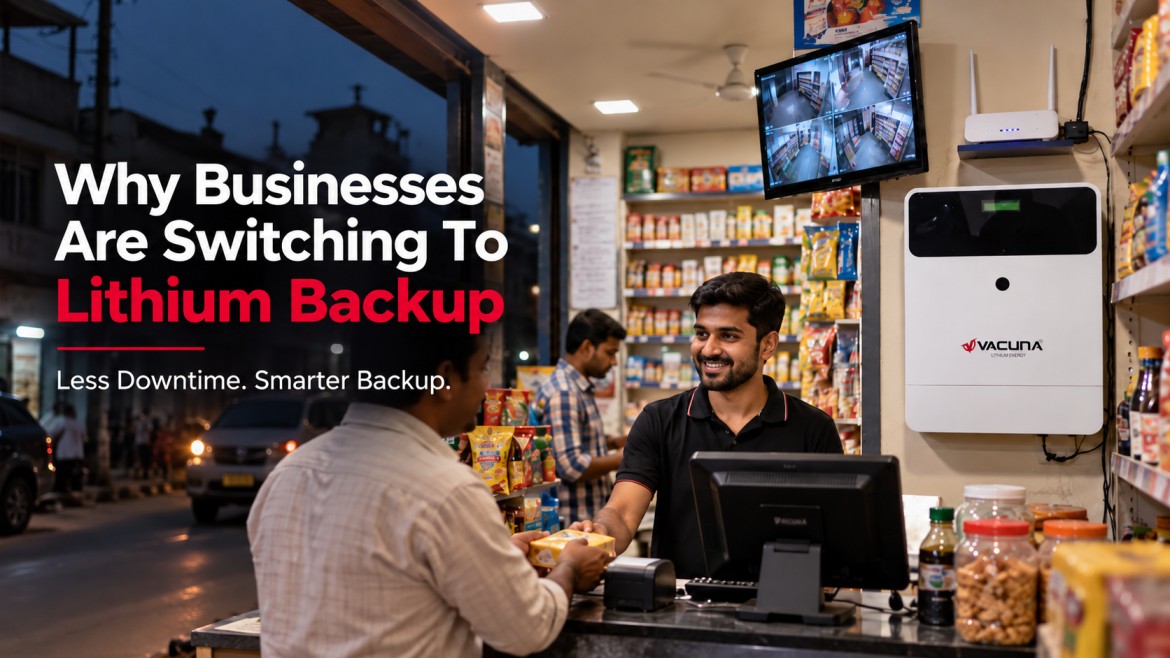
Why Businesses Are Moving From Traditional Batteries To Lithium Backup Solutions

A blackout is not just about turning off the lights in a business environment. This can mean that the shop cannot use the billing machine, that the office is unable to access the internet, and that a small unit is unable to carry out any operation. Businesses that operate computers, network devices, CCTV cameras, and other vital devices would incur losses due to the brief power outage.

This is one of the reasons why businesses have begun exploring a Lithium Battery Inverter in addition to or instead of the conventional lead-acid back-up battery. This is not just about the need for better batteries but also about finding the right back-up solution.

Traditional Batteries Still Have Their Place

Backup power in the form of lead-acid batteries has been around for some time now. These batteries are common and can be very useful in many applications, provided they are appropriately chosen and maintained.

But times are changing.

A small office might experience a number of power failures within a single day. A retail store will require its billing system to be continuously operational. A business might have less room for its backup solution.

These factors become more significant in such cases.

This is not to say that every business must get rid of their old batteries straight away. It all depends on the load, the nature of operation, budget, and the required backup duration.

Why Downtime Has Become A Bigger Concern

Take the case of a small retail shop that faces a power outage.

The lights are out. The billing system is down. Internet routers are shut down. Customers have queued up, but the staff cannot make transactions as usual.

Power may come back on through the battery later, but the impact on the business has already happened.

Even an office could face this situation where computers, Wi-Fi, biometric scanners, CCTV, and many other equipment need power at all times.

For a small manufacturing or commercial entity, the costs may be even more because some machines or operations could come to a halt.

This is why companies consider backup power as a part of operational continuity and not just a safety measure.

Lithium Can Reduce Routine Maintenance

Another reason why lithium technology is considered by companies is low maintenance.

There are certain lead acid batteries that can need more maintenance, based on the type of the battery and its installation.

And this is very important for the business owner who would rather not have his employees take care of the batteries.

This makes Lithium Battery Inverter valuable when the main goal is reliable backup with low battery maintenance.

Still, “low maintenance” does not equal “maintenance-free.”

Faster Charging Can Matter After A Power Cut

It is not just a backup of energy required when the power goes out. There should also be a recharge of the battery when the electricity comes back.

Consider a store that suffers a power outage lasting two hours in the afternoon. Power comes back only for one hour, and then another power outage occurs.

If the battery has not been able to recharge itself sufficiently during that time, the next power outage starts from a lower level of reserve capacity.

Therefore, charging efficiency is essential for businesses suffering frequent power outages.

A Lithium Battery Inverter system well-matched could provide faster charging than some battery systems, depending upon the battery, inverter, charger, and installation.

This would depend upon each system and its specific components. It is not safe to assume that all lithium batteries charge at the same rate.

Space Can Also Influence The Decision

The aspect of space is often overlooked when companies consider the comparison between different types of batteries.

An office setting may have an electric section while a retail environment may have minimal space available.

A clinic, showroom, or even an office environment would appreciate the more compact and efficient nature of backup power.

Lithium batteries may have greater capacity within smaller size as compared to some conventional batteries.

But the aim should not be to choose a smaller battery.

The battery must meet the requirements in terms of power and time.

Longer Service Life Changes The Cost Calculation

Purchase price is one of the first factors customers compare.

It is only natural, but then again, it is especially true for small companies.

However, the cost at which something is purchased is just one factor to take into account. The business would do better to look at the expected lifespan, maintenance costs, how often it will have to be replaced, downtime, and other requirements for operation.

The battery whose purchase price is higher can be justified by longer operational life span and lower maintenance costs.

That is when the Lithium Battery Inverter should be considered from this point of view.

Businesses Also Need To Think About Load

Use of lithium will not work as a solution for a wrongly sized backup system.

For instance, a place that has lighting fixtures, billing machines, CCTV, fans, and network equipment needs batteries that can accommodate the load.

A business place that has computer sets, routers, printers, security gadgets, and others needs something else.

Therefore, before deciding on which system to install, business owners need to determine which devices will be running when there is a blackout and the time it will take. 

It will help to avoid making a very common mistake of sizing a battery using the Ah ratings only.

What About Lithium Battery For UPS Applications?

In businesses having sensitive machinery, one can even think about using a Lithium battery in UPS.

The UPS are used in order to ensure that the critical machines continue to operate even when there is no power supply. In an office environment, network operations, security system, and many other businesses require a battery backup system which is tailor-made for them.

Lithium batteries can be quite helpful where companies require reduced maintenance, reduced space requirements, and extended lifespan of the product.

Yet compatibility is always important. Compatibility between the UPS, battery voltage, charging system, load, and battery management system needs to be ensured.

The choice of the battery should never solely be due to it being lithium.

When Does Switching To Lithium Make Sense?

Lithium backup is one of those considerations that need to be kept in mind if the organization experiences too many power outages, needs rapid charging capability, has limited space for installation, or wants to minimize maintenance costs.

In addition, it might become necessary when the current batteries are being changed too often or fail to provide backup as needed.

However, when there is no issue with the existing system, the organization does not have any concerns about space and maintenance and everything works just fine, there is no need to change anything.

It all depends on necessity.

How Vacuna Approaches Lithium Backup

In Vacuna, lithium battery systems are intended to be used in cases where energy storage is necessary and practical.

For businesses, it is important that the system is chosen based on the need for the energy storage system and not necessarily on the basis of being the latest technology out there.

A Lithium Battery Inverter can serve to be an ideal system for shops, offices, and small-scale commercial facilities taking into account all these considerations.

The battery is just one of the components of the system.

Final Thoughts

Businesses are gravitating towards lithium-based systems for practical reasons.

With minimal maintenance, quick recharge time, small space, and extended service, lithium may be the ideal choice for businesses unable to afford any disruption in their processes.

However, just because lithium may be better than other options does not mean it is always the best option for all situations.

Before considering lithium over the conventional type of battery, businesses need to assess their load, their backup needs, check their inverter’s suitability for the lithium solution, and do the cost comparison over the expected lifespan of the equipment.

If used appropriately, the Lithium Battery Inverter can present businesses with a practical solution for their backup power supply needs.

The thing is not in the battery swap; it is in getting a suitable backup system.

Frequently Asked Questions

1. Why Are Businesses Switching To Lithium Backup Batteries?

Businesses are considering lithium because of benefits such as lower routine maintenance, faster charging, compact installation, and potentially longer service life. Suitability still depends on the application.

2. Is A Lithium Battery Inverter Suitable For Shops?

Yes. A properly sized system can support essential shop loads such as lights, billing equipment, CCTV, routers, and other selected devices during power cuts.

3. Is Lithium Better Than Lead Acid For Business Backup?

Neither technology is automatically better for every business. Lithium can offer advantages in maintenance, charging, space, and service life, while lead-acid remains suitable for many applications.

4. Can A Lithium Battery Be Used With An Existing UPS?

It depends on the UPS model and battery requirements. Voltage, charging settings, communication features, and battery compatibility should be checked before making a replacement.

5. Does A Lithium Battery Need Maintenance?

Lithium batteries generally require less routine maintenance than many traditional battery systems. However, correct charging, installation, temperature, wiring, and system checks remain important.

6. How Should A Business Choose A Lithium Battery Inverter?

Start with the equipment that must run during a power cut. Calculate the load, decide the required backup time, check the inverter and battery compatibility, and then compare suitable systems based on total ownership cost rather than purchase price alone.
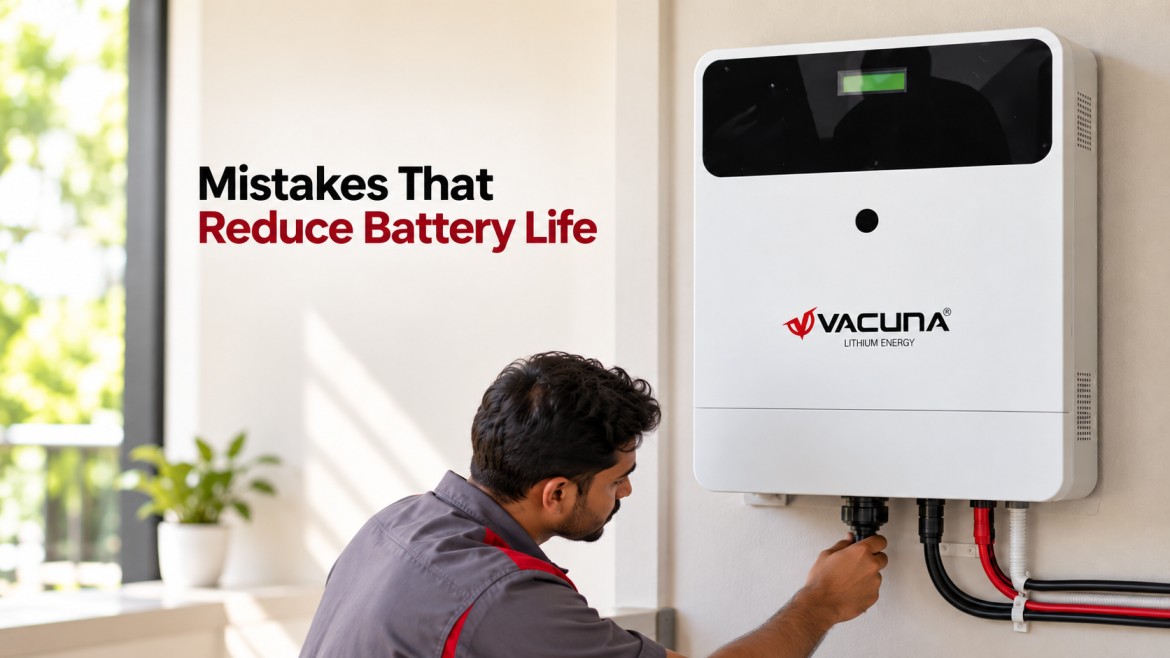
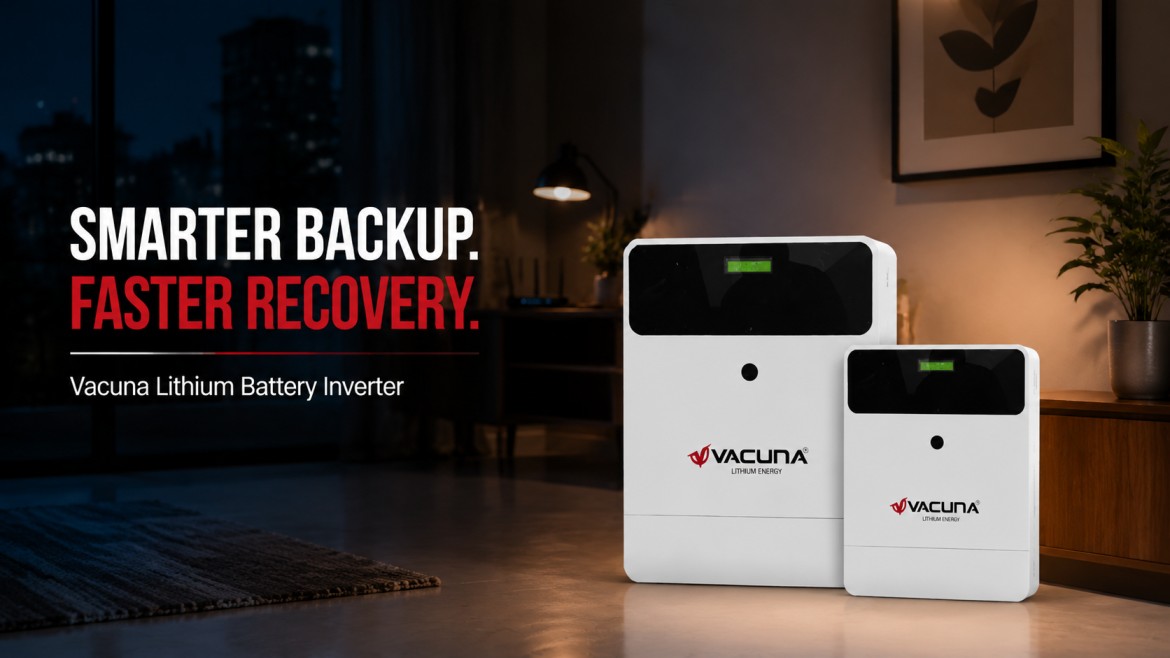
Lithium Battery Maintenance Mistakes That Reduce Battery Life

The Lithium Battery Inverter is able to give a very reliable power source for several years if the battery, the inverter, the charger, and the load cooperate properly. However, even in case of a good lithium battery, there might be some performance issues due to the fact that some installation rules are ignored by users. The point is that these flaws will not result in the battery failure at once but charging process might slow down or backup period might decrease.

It is worth mentioning that lithium batteries require less routine care than conventional lead-acid batteries. This does not mean that they can be installed everywhere, can be charged with any charger, or can be used without control of the whole system. Some measures might really matter.

1. Using The Wrong Charger

An error that comes in quite handy is where one tries to charge the battery using a charger that is incompatible with the battery.

Lithium batteries have their own specific requirements for the charger. The voltage capacity of the charger and its specifications must be appropriate to ensure proper charging of the battery.

This is equally the case with a lithium battery and inverter connection. The inverter has to support the chemistry of the lithium battery as well as its charging specifications.

Before connecting the battery, make sure you know its specifications such as battery voltage, charging voltage, charging current and even inverter specifications. It should not be assumed that a particular charger will function for another battery.

For all people working with Lithium Battery Inverter system, it is important to establish compatibility before charging the battery.

2. Installing The Battery Without Checking The Location

Although lithium batteries are not always as demanding as traditional batteries in terms of regular maintenance, the place where they are installed is still an important factor.

The battery cannot be installed in the place which is exposed to too much heat, water, sunlight, or dust. The installation site must also ensure proper ventilation and protection from any possible damage.

Insufficient space and the lack of proper access to the battery can complicate servicing and inspection of the battery. This installation place can create an unfavorable environment for the battery and other devices connected to it.

The place where the battery should be installed must be chosen before its purchase.

3. Ignoring Extreme Temperatures

Temperature is yet another factor that users often ignore.

Extremely high temperatures can cause some damage to the battery and shorten its lifespan. On the other hand, extremely low temperatures can also affect the battery in terms of charging and overall function.

This does not imply that the battery will require a separate room in each installation. It simply indicates that the battery will work in the temperature range recommended for that particular battery.

In residential, office, shop, or commercial setups, do not keep the battery near any heat-generating machines or in places that get very hot throughout the day.

The above-mentioned principle also applies to the Lithium Battery UPS Application. In the case of a UPS room or equipment room, the environment should be appropriate for the whole backup system.

4. Overloading The Backup System

A bigger battery doesn’t necessarily mean users can hook up as many appliances as they want.

Each back-up system comes with its own capacity. Putting extra load on your system will put strain on your inverter and battery and can shorten the amount of backup time you were expecting to get.

For instance, the user might have started using the battery for fans, light bulbs, Wi-Fi, and some other devices. Then, at some point later, he/she hooked up his/her refrigerator, television, computer, and so on without thinking about the total load.

This causes the battery to appear to provide less back-up.

However, the actual issue is probably just high energy usage.

Make sure to calculate your total power consumption before adding any extra load. Make sure that your appliances should be running or not during a power outage.

5. Using The Battery With An Incompatible Inverter

Lithium battery and inverter need to be considered a unified backup unit.

Voltage level is not the only factor of compatibility. Other factors like charging current, battery settings, communication abilities, and protection needs may need to be considered for different battery and inverter models.

The battery can operate with the inverter successfully at the beginning but will still fail to provide required charging/backup efficiency due to system settings incompatibility.

It is especially true for cases when lead-acid batteries are replaced with lithium ones. Do not assume that your old inverter is compatible with the new battery.

Make sure to verify compatibility recommendations by manufacturer before switching the battery type.

6. Ignoring The Battery Management System

Many lithium-ion batteries come with a Battery Management System, which is usually referred to as a BMS. It is an aid in monitoring and safeguarding the battery by controlling such elements as voltage, current, and temperature.

Nevertheless, this system does not become a reason to neglect other components of the battery system.

In case if the battery continuously reaches its protection limits, users need to find out the reason behind this. Constant alarms, shutdowns, and strange temperature conditions cannot just be overlooked.

7. Poor Wiring And Loose Connections

The battery might be in excellent condition but might give bad output due to problems with the wiring.

Such problems include loose terminal, inappropriate cables, connection issues, and wrong size cables that will affect the electricity supply from the battery to the inverter.

Connections must be checked during the installation process. The cable size must suit the requirements and the terminals must be tight.

If users observe that there is heating around the connection, an unpleasant odor, damaged connections, or there are frequent power outages, the system needs to be checked by a qualified person.

Do not keep on turning on and off the inverter to fix an electrical connection problem.

8. Storing The Battery Incorrectly

Every lithium battery does not always stay permanently connected to the system. There are some batteries that might be stored before the installation or held as a reserve by the dealer.

This is something to consider.

It is essential to follow the instructions of the manufacturer for the recommended charging level, temperature, and duration of storage. The battery must be stored in a dry place.

For the dealers working with a Lithium Battery for UPS, proper warehouse storage is particularly crucial since the batteries can stay in stock before they reach the consumer.

9. Waiting Until There Is A Problem

Most people would tend to observe the battery when the backup gets poor.

This may make it difficult to notice a smaller problem.

It is better to be conscious of any abnormalities in the routine performance.

A longer charging process, frequent shut-downs, alarm, lack of backup, abnormal heat, or even damage should raise a red flag.

Periodic observations should not necessarily be complex.

Observing the inverter screen, observing the visible connections, or using the battery monitoring system when available will do the trick.

The problem may turn out to be a simple installation or usage problem.

How To Get Better Life From A Lithium Battery

It’s actually very simple. Just use the proper charger, choose the correct inverter for your battery, keep within the range of loading, have the proper installation environment, and of course follow all the instructions of the manufacturer.

It helps to know your real power needs as well. The right battery for the load will always work better than just choosing a battery based on its Ah rating.

For companies with a Lithium Battery Inverter, knowing your power needs becomes especially vital since the power needs may change throughout the day.

At Vacuna, we specialize in lithium batteries, and we do our best to ensure a backup solution for inverter and UPS systems. Choosing the right battery is just one of many ways to achieve great results.

Final Thoughts

Even though Lithium batteries are made to minimize maintenance, these batteries are not maintenance-free.

Incorrect charging, improper installation, exposure to harsh conditions, overload, or lack of compatibility may influence their performance. Bad wiring and improper storage may lead to further complications.

However, most of these errors can be avoided.

While selecting a Lithium Battery Inverter, the whole system should be considered rather than just the battery itself.

The battery should be selected according to the inverter, charger, load, and installation conditions. After that, the instructions of the manufacturer should be followed concerning operation and storage.

Long battery life is not dependent on one element.

Long battery life is achieved through proper use of the whole system.

Frequently Asked Questions

1. Does A Lithium Battery Need Regular Maintenance?

Lithium batteries usually need less routine maintenance than traditional lead-acid batteries. However, users should still check connections, charging behaviour, temperature, and overall system performance.

2. Can I Use Any Inverter With A Lithium Battery?

No. The inverter should support the battery’s voltage, charging requirements, and other compatibility requirements. Always check the manufacturer’s recommendations before installation.

3. Can Heat Reduce Lithium Battery Life?

Yes. Excessive heat can affect battery performance and may reduce its useful life. Install the battery in a suitable location within the manufacturer’s recommended temperature range.

4. Why Is The Correct Charger Important?

A suitable charger provides the required voltage and current for the battery. An unsuitable charger may cause slow, incomplete, or improper charging.

5. Is A Lithium Battery For UPS Better Than A Traditional Battery?

A Lithium Battery for UPS can offer advantages such as lower routine maintenance and longer service life in suitable applications. The right choice depends on the UPS, load, operating conditions, and required backup.

6. How Can I Make My Lithium Battery Last Longer?

Use a compatible inverter and charger, avoid excessive loads, maintain suitable operating temperatures, keep connections secure, and follow the manufacturer’s charging, installation, and storage instructions.

Why A Lithium Battery Inverter Makes More Sense For Frequent Power Cuts

A power outage does not always last for hours.There are occasions when power is lost for 10 minutes. After that, it comes back to life. Some time passes; then it goes off again. Such a power outage may appear insignificant at first glance. However, for the household, office, clinic or store it can be quite an irritant.

The Wi-Fi goes out of service. The billing machines restart. The surveillance camera is out. There is a constant flickering of fans and lights. In such premises, the emergency system requires not only the ability to provide long runtime but fast recovery as well. It is here that a Lithium Battery Inverter comes into play.

Frequent Power Cuts Need A Different Backup Plan

Most consumers focus only on the number of hours in which power supply can be disconnected. They pose the question, “How many hours of backup will I have?” This is a pertinent question. However, this is not the only question. In cases of power disconnection, where there are frequent blackouts, another relevant question is posed.

How soon does the battery become usable in preparation for the next black out? The standard battery system might provide backup services in the first blackout. If the battery recharges slowly, it will not be prepared for the next one. As night comes around, the consumer begins to experience reduced backup and increased system stress.

The Lithium Battery Inverter will help in such cases because the lithium batteries will provide faster recharge and energy consumption when properly coupled with the appropriate system. To the daily user, it means less disturbance and increased backup between short outages.

Quick Charging Can Make Daily Life Easier

A battery is not charged to its capacity simply because there has been a restoration of electricity.

Sufficient time is needed for the battery to charge itself. Often, in homes and business setups, this amount of time is restricted due to intermittent power supply. Power might come up for an hour and then be lost again. In such circumstances, if the battery is unable to recharge itself in the process, the next outage poses problems.

That is why many people are now considering Lithium Battery Inverter in India options. These systems can help those who experience frequent power outages and need quick charging help. They can be beneficial to those homes, offices, retail shops, clinics, and small businesses where a constant backup is necessary.

For instance, a retail shop would require lights, billing machines, routers, and CCTV cameras when there is a power outage. When these systems stop functioning, their customer service gets affected. A quick backup system could minimize this problem.

Stable Backup Matters More Than People Realise

A power failure is not only an interruption of electricity supply to electrical appliances. This is also the disruption of routine activities. The student cannot participate in classes. The businessman loses his billing process. The small office does not have Internet. The clinic might have problems with their reception, lighting, or computer systems.

Therefore, it is important that a good inverter system does not appear weak each time there is a short interruption. Lithium Inverter Batteries can provide much better back up when the inverter, charger, and load are designed correctly. Moreover, Lithium Inverter Batteries require less maintenance than many other batteries.

It is very important for those who do not want to check regularly water levels, terminals, or back-up issues. But less maintenance does not mean no maintenance. It just means easier usage..

Why Lithium Works Well For Modern Loads

Backup in the old days used to mean fans and lights. But nowadays, the list is a bit longer.

The house needs WiFi, mobile phones, laptops, CCTV, smart appliances, and in some cases even medical devices. The shop requires billing machines, internet, lighting, cameras, and payment methods. The office requires routers, attendance systems, computer terminals, and minimum lighting. These loads individually might appear to be light but in essence, they are very essential.

The Lithium Battery Inverter is a device that comes in handy since it meets the new backup requirement. It offers portable backup power support, fast charging, and efficient use of energy when chosen wisely. People who have limited space also find lithium more sensible since houses and shops do not have enough battery storage space.

The System Still Needs Proper Matching

This random purchase is not possible for the lithium inverter system. Compatibility between the battery and inverter is necessary. The type of charger used is also required to be compatible with the battery. The load on the system must remain below the set limits.

If the load is too high, even the best of batteries will discharge faster. Similarly, in case the type of charger is unsuitable, the battery will not work properly. Moreover, if there is no knowledge about the need for the backup system, the wrong size of the system will be purchased.

Hence, before buying the lithium battery inverter in India, the following points must be kept in mind.

What equipment needs a backup?

How often is there a power cut?

For how long does the charging time usually take place?

Is there any compatibility between the battery and the inverter?

Is there any facility available for service?.

Where Vacuna Fits In

Here at Vacuna, we recognize that not all users are facing the same power problem.

Some will require backup during long power outages; others will require assistance during short power interruptions. A shop requires different considerations than a house. A clinic requires different considerations than a small business. That is why choosing the right battery requires an understanding of its practical applications.

Our Lithium batteries are suited to help meet modern day backup requirements, whether in inverters and commercial applications. It is not only about battery storage. The entire system should cater to the users’ energy needs, recharge needs, available space, and lifestyle. Lithium Batteries inverter is the most suitable choice where users demand quick recovery, clean backup, and convenience..

Final Thoughts

While power cuts may not last for too long, they are annoying. They interfere with work, comfort, billing, internet, and the day’s routine.

An ordinary backup mechanism will do for rare power cuts. However, if the power cuts recur, a more reliable and fast recovery backup system is needed by the user. This is why Lithium Inverter Batteries have become a preferable choice for homes, businesses, offices, and clinics.

Not only should an ideal backup system withstand the first power cut.  It should be ready to face the next power cut as well..

Frequently Asked Questions

1. What Is A Lithium Battery Inverter?

A Lithium Battery Inverter is an inverter system designed to work with lithium batteries for power backup. It helps support faster charging, better energy use, and lower routine maintenance when matched correctly.

2. Is A Lithium Battery Inverter Good For Frequent Power Cuts?

Yes. It can be useful in areas where power cuts happen often. The faster charging ability of lithium batteries can help the system recover better between outages.

3. Are Lithium Inverter Batteries Better Than Normal Inverter Batteries?

They can be better for users who need faster charging, compact size, lower maintenance, and stable backup. However, the right choice depends on load, budget, backup time, and charging setup.

4. Can A Lithium Battery Inverter Be Used In Shops And Offices?

Yes. It can support essential loads such as lights, Wi-Fi, billing systems, CCTV, computers, and basic office equipment. The system size should match the actual load.

5. What Should I Check Before Buying A Lithium Battery Inverter In India?

Check battery capacity, inverter compatibility, charger support, backup requirement, service availability, safety features, and expected recharge time.

6. Does A Lithium Battery Inverter Need Maintenance?

It usually needs less routine maintenance than many older battery setups. Still, users should follow proper charging, avoid overload, and get the system checked when backup drops suddenly.