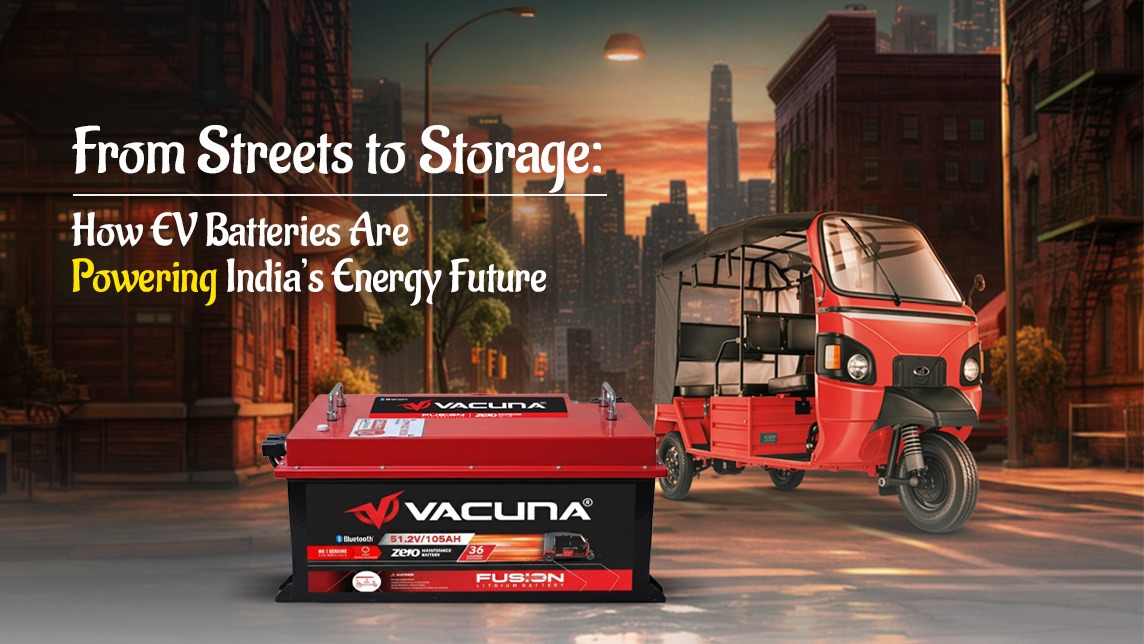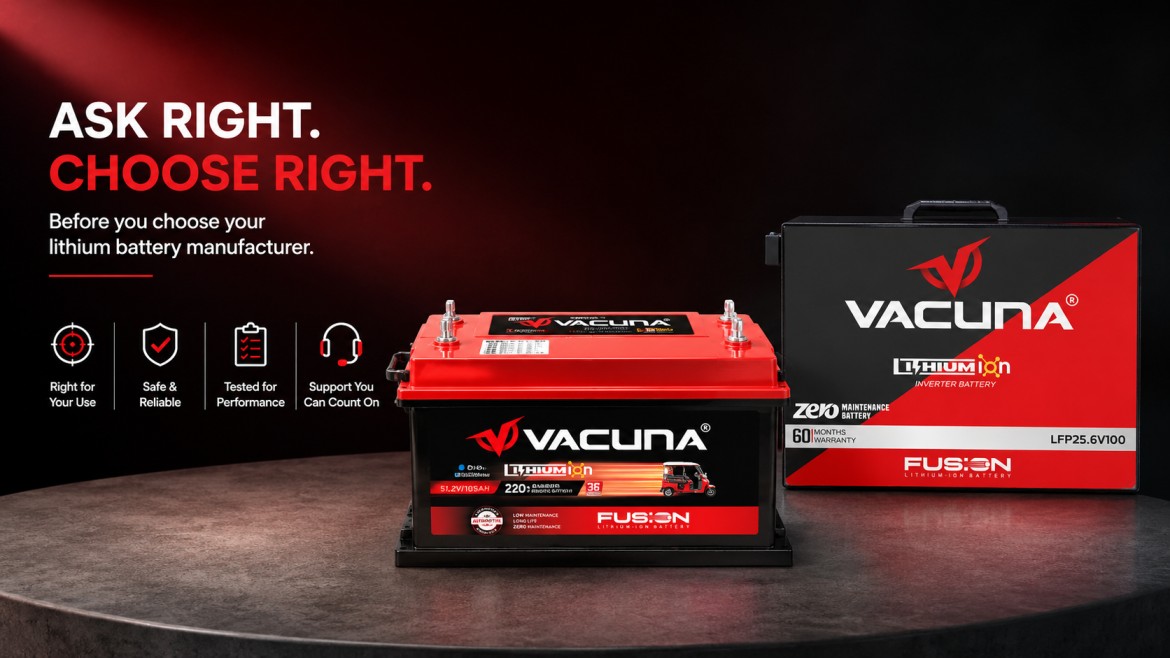
From Streets to Storage: How EV Batteries Are Powering India’s Energy Future

Clean energy in India isn’t just about big solar farms or windmills anymore. It’s showing up right on the streets, especially with the rise of e-rickshaws.

But here’s the interesting part. What happens to those batteries once they’re too old to run a vehicle?

Energy today isn’t only about producing power. It’s also about using it smartly. And that’s where things get pretty exciting. Old E Rickshaw Batteries aren’t just thrown away. They’re getting a second life.

The Rise of E-Rickshaws in India

If you step outside in most cities or towns, you’ll see e-rickshaws everywhere. They’ve become a go-to option for short rides because they’re cheap to run, don’t pollute, and are backed by government support.

These vehicles run on batteries, usually lead-acid or lithium-ion.

After about 3 to 5 years, the batteries aren’t strong enough to power a vehicle anymore. But here’s the thing, they still have around 60 to 80 percent of their capacity left. That’s a lot of usable energy going to waste if ignored.

Second-Life Batteries: A Smart Idea

These batteries are instead being utilized for some other purposes.

Such batteries have been named second life batteries. In simple words, these are recycled EV batteries, which can be used for some lesser tasks. Applications include the storage of power in houses, backups for solar panels, or even for smaller businesses to light their premises.

It’s easy to see why this would make sense in a developing nation such as India.

From Vehicles to Homes

At first, these batteries power e-rickshaws. Later, they move into a different role.

They get turned into energy storage batteries and become part of systems that store electricity for homes, businesses, or solar setups.

So instead of ending up as waste, they keep working, just in a different way. And that helps bring down the cost of energy storage too.

Why This Actually Matters

However, this is not simply an economic decision. Second-life batteries make solar energy more practical. They enable storage of excess energy to be used at a later time, for example, at night or when there is no access to electricity.

And in places where electricity isn’t reliable, these systems can make a real difference. People get more steady power without depending fully on the grid.

How It’s Already Happening

This isn’t just an idea. It’s already happening. vacuna

Used EV batteries are being tested and sorted. The ones that still have life left are repurposed and used in storage systems for homes, shops, and solar projects.

It’s slowly becoming part of how the energy system works.

The Challenges

Of course, it’s not all smooth.

There’s still a need for better safety checks, proper systems to collect used batteries, and clear rules around how everything should work.

But things are improving. As more people get on board and technology gets better, these problems are being worked on.

A More Circular Way to Use Batteries

The way we use batteries is changing.

Instead of using them once and throwing them away, we’re starting to use them again in new ways.

E Rickshaw Batteries don’t just stop being useful after their first job. They move on to support homes and renewable energy systems.

And looking ahead, they’re going to play an even bigger role in how India powers itself.

Conclusion

E Rickshaw Batteries are doing more than just running vehicles now.

They’re helping power homes, support solar energy, and make electricity more accessible.

Second-life batteries are making energy cheaper, reducing waste, and helping build a more practical energy system.

The shift from streets to storage is already happening, and it’s only going to grow from here.

FAQs

1. What happens to E Rickshaw Batteries after they wear out?

They’re reused as energy storage batteries for homes, solar setups, and backup power.

2. What is a second-life battery?

It’s an old EV battery that still works and is reused for things like storing electricity.

3. Are these batteries safe?

Yes, as long as they’re properly tested and handled.

4. How do they help with solar power?

They store extra electricity so you can use it later when needed.

5. Why does this matter for India?

It helps lower costs, reduces waste, and makes energy more available to more people.

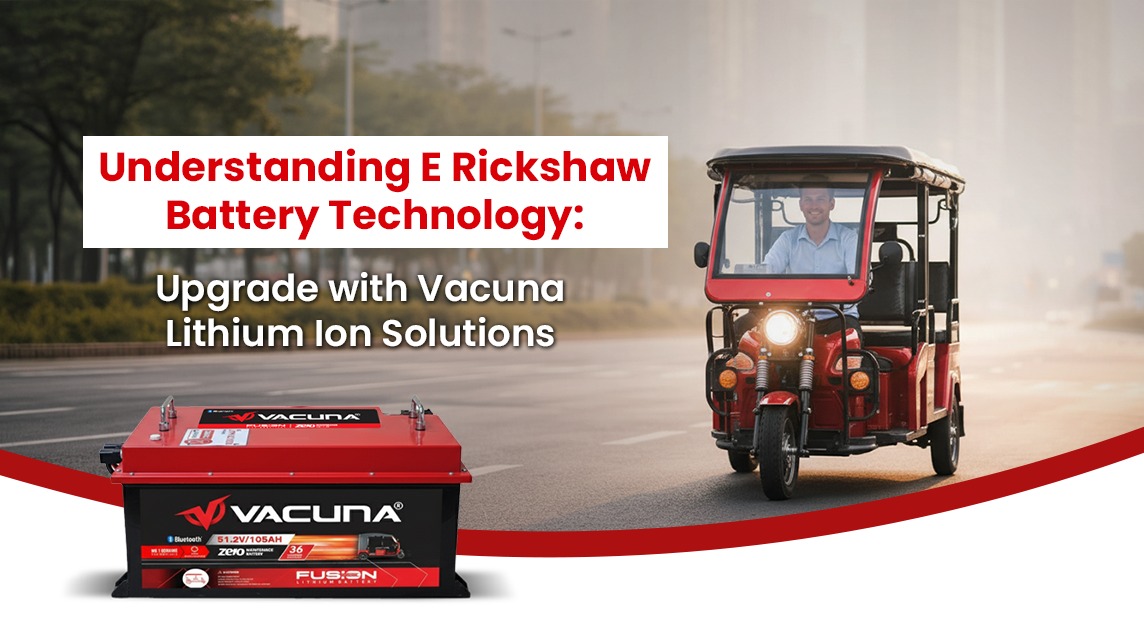
Understanding E Rickshaw Battery Technology: Upgrade with Vacuna Lithium Ion Solutions

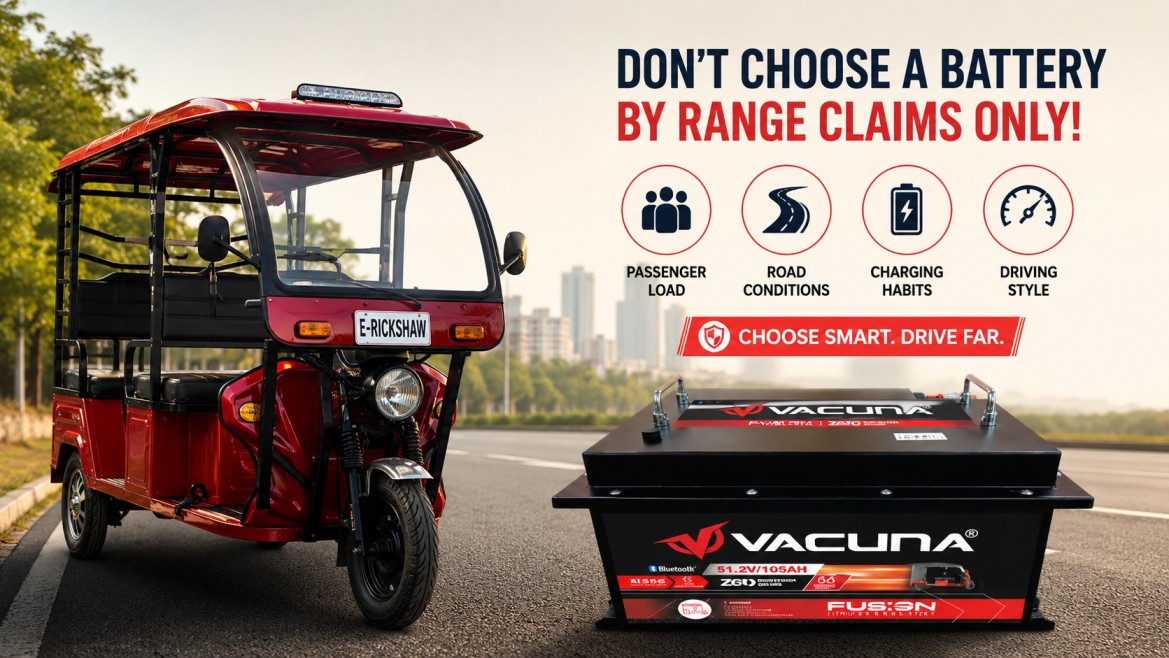
E Rickshaws have become very common. They’re easy to run, better for the environment, and a solid way to earn daily income. But here’s the thing most people don’t talk about enough, your battery choice can make or break your experience. A lot of drivers are now switching to a Lithium Ion Battery for E Rickshaw, and honestly, it just makes life easier. Faster charging, longer life, and way less maintenance. Let’s walk through it like we’re just chatting.

Key Components of E Rickshaw Battery Technology

1. Battery Types

You’ve probably heard of lead acid, tubular, and lithium ion batteries.

Lead acid batteries are cheaper when you buy them, but they need more care and don’t last that long. Lithium ion batteries cost more at the start, but they save you money later. If you’re tired of frequent replacements and maintenance, a Lithium Ion Battery for E Rickshaw feels like a big upgrade.

2. Battery Capacity

This one’s easy. The battery capacity determines how far you can travel on a single charge.

If you are driving for the whole day, you don’t want to be stopping for a recharge. Vacuna batteries are designed for constant performance so you can keep on driving without worrying about a thing.

3. Charging Time

Time is money, especially if your business is your vehicle.

Old batteries take almost the whole day to recharge. That’s a waste of time, not to mention money. A Lithium Ion Battery for E Rickshaw takes a fraction of the day, so you can get back on the road and earning faster.

4. Durability and Maintenance

Let’s be real, nobody enjoys checking water levels or dealing with battery issues every few days.

That’s where lithium ion really stands out. No regular maintenance, no extra effort. Vacuna batteries are built tough, so they can handle daily use without giving you trouble.

5. Eco Friendly

If you’re already driving an e rickshaw, you’re doing your part for cleaner transport. Lithium ion batteries take it a step further. They’re more efficient and better for the environment.

Vacuna Lithium Ion Battery for E Rickshaw: A Smarter Choice

Vacuna gets what drivers actually need. Their Lithium Ion Battery for E Rickshaw is designed to make your work smoother and more reliable.

Key Features of Vacuna Batteries

High Mileage Performance

You can travel more on a single charge, which means more rides and better daily income.

Fast Charging

Less waiting around, more time driving. Simple as that.

Zero Maintenance

No water topping, no regular servicing. Just charge it and go about your day.

Lightweight Design

The battery is lighter, so your vehicle runs better and feels easier to handle.

Long Life

You won’t need to replace it often, which saves you money and stress.

Eco Friendly

It’s a cleaner option that supports a greener future.

Additional Benefits

Vacuna batteries come with built in safety features that protect against overheating and overcharging. You get smooth and steady performance while driving. Whether you’re a single driver or managing multiple e rickshaws, this battery fits right in.

Why Choose Vacuna

At the end of the day, you want something dependable. Vacuna keeps things simple. Their Lithium Ion Battery for E Rickshaw is reliable, easy to use, and made for real world driving conditions.

Conclusion

So, if you are planning to upgrade, Lithium Ion Battery for E Rickshaw is the way to go. You will have more time to earn and less time to worry about the battery.

At Vacuna, you are choosing a battery that works as hard as you do.

FAQs

1. Why choose a Lithium Ion Battery for E Rickshaw?

It charges fast, lasts long, and is very easy to maintain.

2. How long does a Lithium Ion Battery last?

A Lithium Ion Battery lasts for years.

3. How long does it take for a Lithium Ion Battery to charge?

It takes about 3-5 hours for a Lithium Ion Battery to be fully charged.

4. Is a Lithium Ion Battery safe?

They come with protective features for overheating and overcharging.

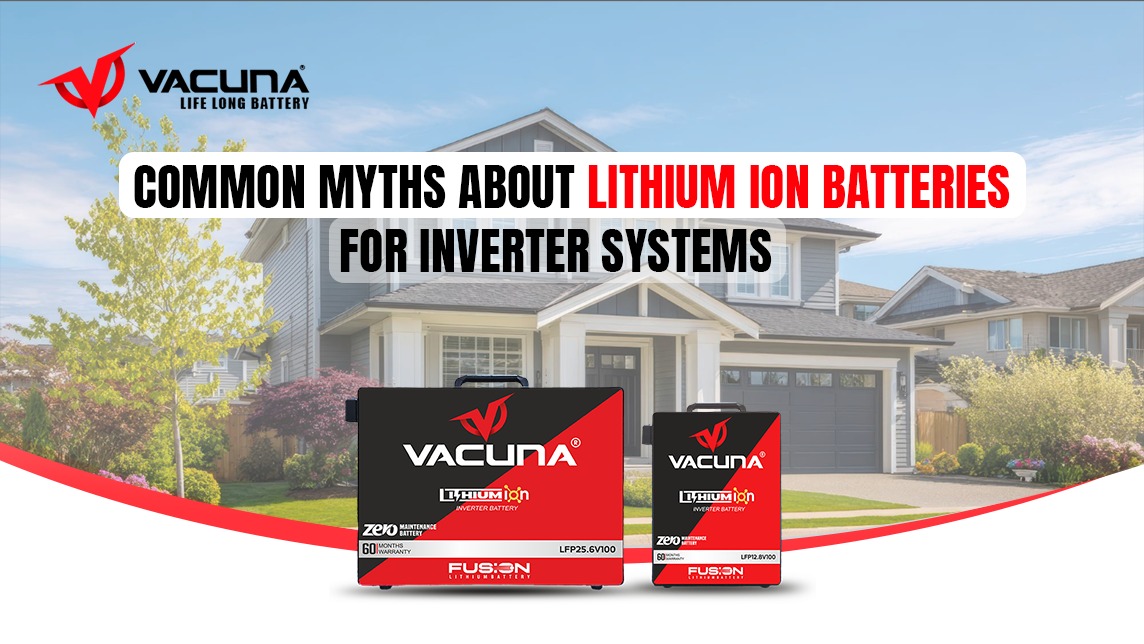
Common Myths About Lithium Ion Batteries for Inverter Systems

Power cuts are common disruptions to our daily routines. It is here that the significance of an Inverter System is realized. In the past few years, Lithium Ion Batteries for Inverters have gained popularity, replacing the conventional lead acid batteries.

Lithium Ion Batteries have the benefits of faster charging time, extended usage time, and reduced maintenance. However, many are reluctant to use Lithium Ion Batteries due to various myths and misconceptions. In the following paragraphs, we shall discuss the myths associated with the usage of Lithium Ion Batteries.

Myth 1: Lithium Ion Batteries Are Not Safe for Home Use

The major concern of some of the users is whether Lithium Ion Batteries can be safely used at home. Some of the users think that Lithium Ion Batteries are used in other electronic equipment such as smartphones and electric vehicles; therefore, they cannot be safely used in inverters.

However, modern inverter batteries offer a number of advanced features, such as the Battery Management System (BMS), which can avoid different issues such as overheating, overcharging, and short-circuiting. Thus, Lithium Ion Batteries can be safely used in inverters at home.

Myth 2: Lithium Ion Batteries Are Too Expensive

Another myth that people associate with Lithium Ion Batteries is that they are too expensive compared to other types of batteries such as lead acid batteries. This may be true, but at the same time, one has to think about the benefits one receives from using such types of Lithium Ion Batteries.

Whereas lead acid batteries can be used for only 3 to 4 years, Lithium Ion Batteries can offer a number of charge cycles and can be easily maintained.

Myth 3: Lithium Ion Batteries Don’t Perform Well During Long Power Outages

There are people who are worried that Lithium Ion Batteries are not going to be useful in case of a power outage. However, it should be noted that Lithium Ion Batteries are known to be energy-efficient batteries that can be recharged in a quick manner in case of a power outage. Therefore, they can be useful in case of frequent power outages. A Lithium Ion Battery for Inverters can be useful in case of frequent power outages in a home.

Myth 4: Lithium Ion Batteries Require Complicated Maintenance

It is normally assumed that Lithium Ion Batteries require just as much maintenance as traditional lead acid batteries that require inspection, addition of water, and cleaning of terminals.

However, it should be noted that Lithium Ion Batteries are low-maintenance batteries that do not require inspection or addition of water.

Myth 5: Lithium Ion Batteries Can’t Handle Heavy Appliances

Another misconception is that Lithium Ion Batteries for Inverters cannot operate heavy loads such as Refrigerators and/or Lighting Systems.

This is not true. In fact, the performance of a Lithium Ion Battery for Inverter entirely depends on the capacity of the Inverter and how it is configured. A Lithium Ion Battery for Inverter has the capability of running various home appliances at a stable voltage output without any voltage drops.

How Vacuna Helps

The selection of the appropriate battery technology can make a huge difference for the reliability of your backup power supply. With an increasing number of homeowners seeking efficient power solutions, Lithium Ion Batteries for Inverters have been gaining popularity.

There are companies like Vacuna that provide high-end power solutions based on Lithium Batteries. These power solutions are efficient, small, and simple to manage.

Conclusion

Many concerns about Lithium Ion Batteries for Inverters are based on outdated information or common misconceptions. Once you understand the facts, it’s clear that Lithium Ion Batteries for Inverters offer numerous benefits, including a longer lifespan, faster charging, and minimal maintenance. This makes them an excellent choice for modern home backup systems.

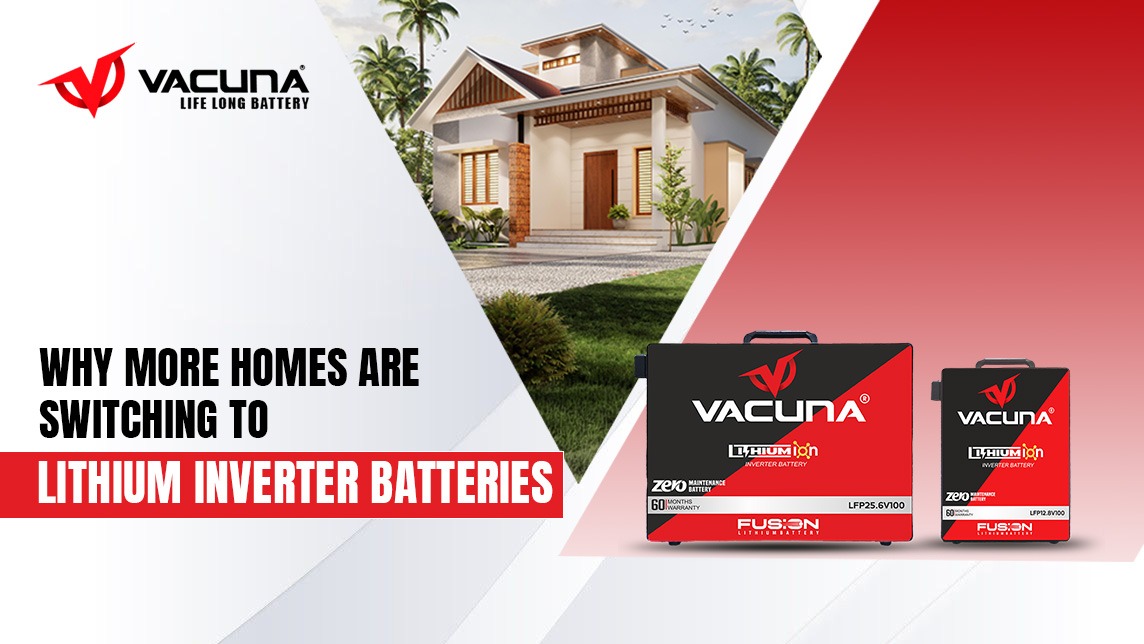
Why More Homes Are Switching to Lithium Inverter Batteries

Power cuts are annoying. Really annoying. One second you are watching something, the fan is running, everything is fine. Then suddenly nothing. Just silence and heat. If you live in an apartment or a city home, you know this feeling well. It is something you genuinely need. And more and more people are realising that lithium inverter batteries handle this job much better than the old lead acid ones did.

Yes they cost a bit more upfront. But the full picture looks quite different.

Reasons why more homes are switching to Lithium Inverter Batteries

1. They Last a Lot Longer

This is probably the biggest thing.

Old lead acid batteries give you maybe three to four years if you are lucky. Lithium inverter batteries? Easily eight to ten years. That is more than double. So while you are replacing a lead acid battery twice or even three times, your lithium battery is still going strong.

Fewer replacements means less money spent and honestly less stress. Nobody enjoys shopping for a new battery every few years.

2. Forget the Maintenance Routine

Old batteries were a whole thing. Check the water levels. Clean the terminals. Make sure it is not overcharging. It added up in time and money.

Lithium inverter batteries are sealed. You install them and that is pretty much it. No water to top up, no terminals to scrub, no weekend battery checks. That kind of simplicity is genuinely underrated.

3. Charges Fast and Wastes Less Power

Here is something people do not always think about. How efficiently does your battery actually charge?

Lead acid batteries waste a fair bit of energy during charging. Lithium inverter batteries are much more efficient. They charge faster and lose less electricity in the process. So when a power cut hits and comes back, your inverter tops up quickly and is ready well before the next outage.

Over months and years that efficiency actually shows up on your electricity bill.

4. Fits Anywhere Without the Fuss

If you live in an apartment you already know space is not something you have in abundance. Old batteries were bulky and heavy and finding a spot for them was always a bit of a puzzle.

Lithium inverter batteries are smaller and lighter. They tuck in easily, take up less room, and are way simpler to handle during delivery and installation. Small detail but it genuinely makes life easier.

So Is It Worth It?

The upfront cost is real. But when you add up the replacement costs you avoid, the maintenance you skip, the electricity you save, and the appliance repairs you never have to deal with, lithium inverter batteries come out ahead. By a good margin.

For anyone living in a city home or apartment dealing with regular power cuts, this is one of those upgrades that just makes sense. You spend a little more once and stop thinking about it for years.

That kind of peace of mind is honestly worth a lot.

Upgrade to Vacuna Lithium Inverter Batteries today and enjoy reliable, long-lasting power for your home. Get in touch now to find the perfect battery for uninterrupted energy and peace of mind

Why More Homes Are Switching to Lithium Inverter Batteries

Power cuts are annoying. Really annoying. One second you are watching something, the fan is running, everything is fine. Then suddenly nothing. Just silence and heat. If you live in an apartment or a city home, you know this feeling well. It is something you genuinely need. And more and more people are realising that lithium inverter batteries handle this job much better than the old lead acid ones did.

Yes they cost a bit more upfront. But the full picture looks quite different.

Reasons why more homes are switching to Lithium Inverter Batteries

1. They Last a Lot Longer

This is probably the biggest thing.

Old lead acid batteries give you maybe three to four years if you are lucky. Lithium inverter batteries? Easily eight to ten years. That is more than double. So while you are replacing a lead acid battery twice or even three times, your lithium battery is still going strong.

Fewer replacements means less money spent and honestly less stress. Nobody enjoys shopping for a new battery every few years.

2. Forget the Maintenance Routine

Old batteries were a whole thing. Check the water levels. Clean the terminals. Make sure it is not overcharging. It added up in time and money.

Lithium inverter batteries are sealed. You install them and that is pretty much it. No water to top up, no terminals to scrub, no weekend battery checks. That kind of simplicity is genuinely underrated.

3. Charges Fast and Wastes Less Power

Here is something people do not always think about. How efficiently does your battery actually charge?

Lead acid batteries waste a fair bit of energy during charging. Lithium inverter batteries are much more efficient. They charge faster and lose less electricity in the process. So when a power cut hits and comes back, your inverter tops up quickly and is ready well before the next outage.

Over months and years that efficiency actually shows up on your electricity bill.

4. Fits Anywhere Without the Fuss

If you live in an apartment you already know space is not something you have in abundance. Old batteries were bulky and heavy and finding a spot for them was always a bit of a puzzle.

Lithium inverter batteries are smaller and lighter. They tuck in easily, take up less room, and are way simpler to handle during delivery and installation. Small detail but it genuinely makes life easier.

So Is It Worth It?

The upfront cost is real. But when you add up the replacement costs you avoid, the maintenance you skip, the electricity you save, and the appliance repairs you never have to deal with, lithium inverter batteries come out ahead. By a good margin.

For anyone living in a city home or apartment dealing with regular power cuts, this is one of those upgrades that just makes sense. You spend a little more once and stop thinking about it for years.

That kind of peace of mind is honestly worth a lot.

Upgrade to Vacuna Lithium Inverter Batteries today and enjoy reliable, long-lasting power for your home. Get in touch now to find the perfect battery for uninterrupted energy and peace of mind.

Why Inverter Battery Performance in Indian Conditions Depends More on Usage Than Technology

Battery technology has advanced rapidly. Specifications look impressive. Charging times are shorter. Efficiency ratings appear reassuring. Still, across India, battery performance tells a different story. Two users with the same product often experience completely different results. The reason rarely lies in the technology itself. It lies in how the battery is used, especially in the case of Lithium Inverter Batteries.

In this blog about Vacuna, let’s explore how inverter battery performance in India relies more on usage than on technology.

Indian Power Conditions Are Inherently Demanding

India does not offer predictable power environments. Voltage fluctuates without warning. Power cuts vary in duration and frequency. Ambient temperatures remain high for extended periods. As a result, batteries operate under constant stress.

Lithium Inverter Batteries are designed to handle these challenges. However, performance depends on alignment between design and usage. When batteries face frequent overloading or unstable charging input, efficiency drops. This decline reflects operating conditions, not technological limitations.

Usage Habits Shape Battery Health Over Time

Battery performance builds gradually. Daily charging patterns, depth of discharge, and load consistency influence internal stability. Frequent deep discharges strain cells unnecessarily. Irregular charging disrupts balance cycles.

Lithium Inverter Batteries respond positively to disciplined usage. When users manage loads thoughtfully and follow proper charging routines, output remains stable. Over time, capacity retention improves. Reliability increases quietly, without dramatic intervention.

Heat, Load, and Timing Decide Real Performance

Temperature impacts battery chemistry directly. In many installations, batteries sit in confined spaces with limited airflow. Heat builds up. Efficiency declines. Capacity loss follows slowly.

Load behavior compounds the issue. Sudden spikes or continuous heavy draws place pressure on internal systems. Lithium Inverter Batteries regulate energy efficiently. Still, they perform best when loads remain within recommended limits and usage stays consistent.

Technology Delivers Potential, Usage Unlocks It

Advanced battery technology offers capability, not immunity. Lithium Inverter Batteries support faster charging, higher efficiency, and longer service life. However, these benefits emerge only when usage respects design parameters.

Vacuna engineers inverter batteries specifically for Indian operating realities. Even so, informed usage remains essential. Education bridges the gap between strong engineering and real-world reliability.

Reliability Comes From Alignment, Not Assumptions

Many users expect technology to compensate for misuse. Unfortunately, that expectation leads to dissatisfaction. Reliability develops when product design and user behavior support each other.

When Lithium Inverter Batteries operate under controlled load conditions with stable charging schedules, performance becomes predictable. Backup remains consistent. Energy efficiency improves. Stress reduces.

Conclusion: Performance Starts With the User

In Indian conditions, battery performance reflects usage discipline more than technological complexity. Lithium Inverter Batteries provide advanced capability. Yet, real value appears only when users engage responsibly.

Vacuna focuses on reliability that holds up in real environments, not ideal ones. When correct usage supports thoughtful design, battery performance delivers what truly matters—dependable power, day after day.

Understand how the right battery usage and design work together in real Indian conditions. Explore Vacuna’s lithium inverter battery solutions built for everyday reliability.

FAQs

Q1. Why does Lithium Inverter Batteries performance vary so widely in India?

Because of voltage fluctuation, climate stress, and user habits, battery health is directly affected.

Q2. Can misuse reduce lifespan even with advanced technology?

Yes. Overloading and irregular charging shorten the service life.

Q3. How does Vacuna ensure long-term performance?

Vacuna designs for Indian conditions and emphasizes correct usage practices.

Vacuna Lithium-Ion Inverter Battery: Reliable Power for Every Home

Power supply variations continue across many Indian regions. Some hours remain stable, while others change without warning. This inconsistency affects different routines like work, rest, and essential tasks, and thereby creates a steady demand for backup systems that can respond quickly and reliably. In this blog by Vacuna,a trusted  lithium ion battery manufacturer in India, we will explore how Vacuna’s lithium-ion inverter batteries provide consistent, long-lasting power for every household

Vacuna Lithium-Ion Inverter Battery

Vacuna has introduced its new lithium-ion inverter battery at a moment when expectations are shifting. Users now look for longer life, safer operation, and simpler upkeep. The new model is designed with these requirements in mind, hereby combining performance with practical usability. It also reflects a broader transition in the backup power sector, where older systems slowly give way to advanced, maintenance-free options.

Modern Design and Smarter Performance for Every Space

Across homes, offices, and shops, the shift toward lithium technology is becoming more visible. Traditional batteries remain familiar, yet they require frequent checks, longer charging time, and regular servicing. Vacuna’s new inverter battery adopts a different approach. It uses high-quality lithium cells managed by an intelligent BMS that oversees temperature, charging patterns, and safety functions. This structure, meanwhile, supports smoother and more predictable performance.

One practical benefit is the compact and lightweight design. Users often struggle with bulky batteries that occupy too much space. The newer lithium model reduces this concern, thereby offering strong power backup in a smaller footprint. Such advancements reflect the growing expertise of a leading lithium ion battery manufacturer in India, where products are shaped according to regional electricity behaviour and user expectations.

Features That Strengthen Long-Term Value

Vacuna has focused on efficiency and user comfort. Some features stand out clearly:

• Faster charging, useful for areas with brief electricity windows
• Longer backup hours for essential appliances
• Zero maintenance needs throughout its lifespan
• Built-in protection against overcharging and deep discharge
• A lighter structure that is easier to place indoors
• Compatibility with newer inverter systems

As reliance on electronic devices increases, these features further support everyday routines. A trusted lithium ion battery manufacturer in India ensures that such systems are prepared for frequent usage, temperature variations, and inconsistent grid supply.

Financial Efficiency Over the Years

While the initial investment in lithium batteries may seem higher, their long-term behaviour tells a different story. They operate with less energy loss during charging, thereby lowering electricity consumption. They do not need water topping or repeated servicing, which in turn reduces maintenance cost. Their lifespan extends across more cycles, offering steady performance for several years.

Vacuna’s new model follows the same pattern, providing consistent output even after extended use. For households, workplaces, and small commercial units, this reliability becomes a meaningful advantage. These qualities reflect the technical knowledge of an experienced lithium ion battery manufacturer in India, especially in creating products suited for long-term and high-frequency operation.

Supporting Modern Digital and Practical Needs

Today’s homes depend heavily on uninterrupted power for communication, study, work, and entertainment. Sensitive devices like computers and medical equipment function better when backed by stable voltage. Lithium inverter batteries support such requirements by offering smoother transitions when the power supply drops. Meanwhile, their efficient energy storage helps reduce wastage, thereby contributing to broader sustainability efforts.

Conclusion

Vacuna’s lithium-ion inverter battery enters the market at a time when dependable backup power has become essential rather than optional. With higher energy demands and changing user habits, the shift toward advanced lithium technology appears both timely and practical. The product offers a balanced mix of durability, safety, and consistency- qualities supported by a capable lithium ion battery manufacturer in India. Users looking for a more dependable system may hereby find this solution suitable for today’s and tomorrow’s power needs.

FAQs

1. How long does a Vacuna lithium-ion battery last?

It provides reliable backup for several years, with multiple charge-discharge cycles depending on usage.

2. Is it safe for sensitive devices like computers and medical equipment?

Yes. The intelligent BMS keeps voltage stable and protects devices from overcharging or sudden drops.

3. Does it require regular maintenance?

No. Vacuna lithium-ion batteries are maintenance-free, unlike traditional lead-acid options.

4. Can it handle frequent power outages?

Yes. These batteries are designed for repeated use and perform reliably even with inconsistent electricity supply.

5. Where can I buy Vacuna batteries?

They are available through authorized dealers and online platforms. Visit the official Vacuna website to find a dealer near you.