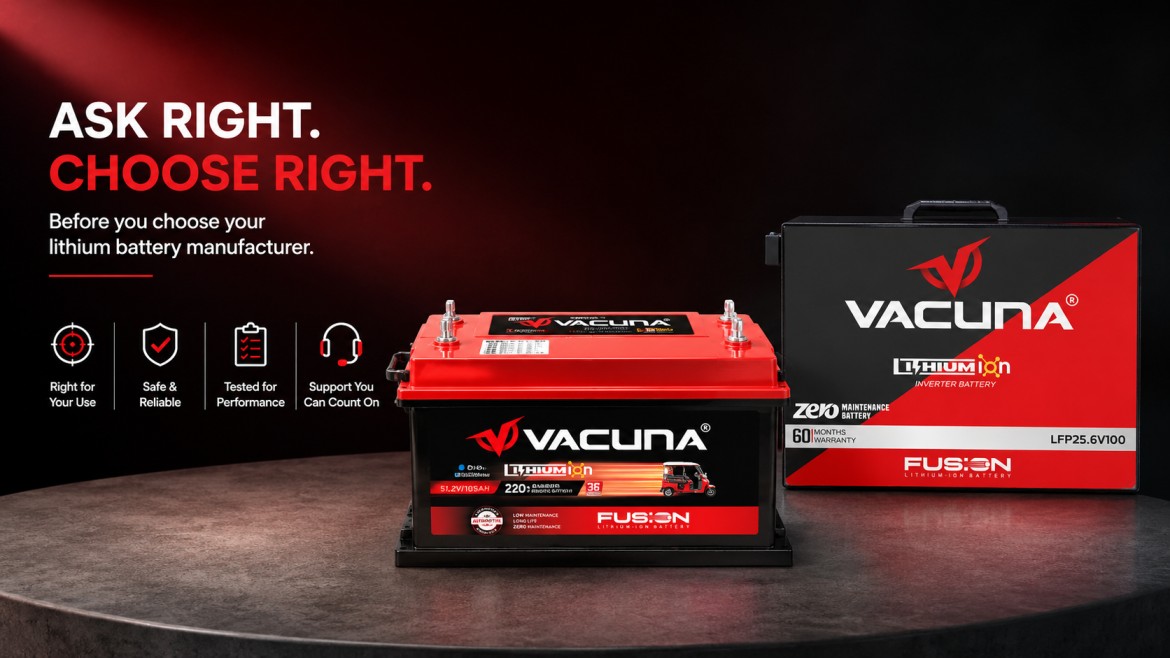
Purchasing Lithium Ion Battery for Inverter is not just like purchasing a conventional spare part. It can either be used in the invertor, e-rickshaw, UPS, solar energy system or commercial UPS systems. They all have different purposes. The requirement of a home is consistent backup. An e-rickshaw needs runtime. The office will require safe UPS system. Shop would need uninterrupted power during billing time. That is what a reliable lithium ion batteries manufacturers in india ensures.
Thus, the right question should not only be:
“How much does it cost?”
But it should be rather,
“What battery is designed for my application?”
That’s how you understand the importance of careful comparison of lithium-ion batteries manufacturers in India. The good manufacturer will not just emphasize the capacity and price. It will give information about testing, safety, charger matching, warranty and support. In Vacuna, we believe that the selection of lithium battery begins with the application requirement of the customer, not the product specification.
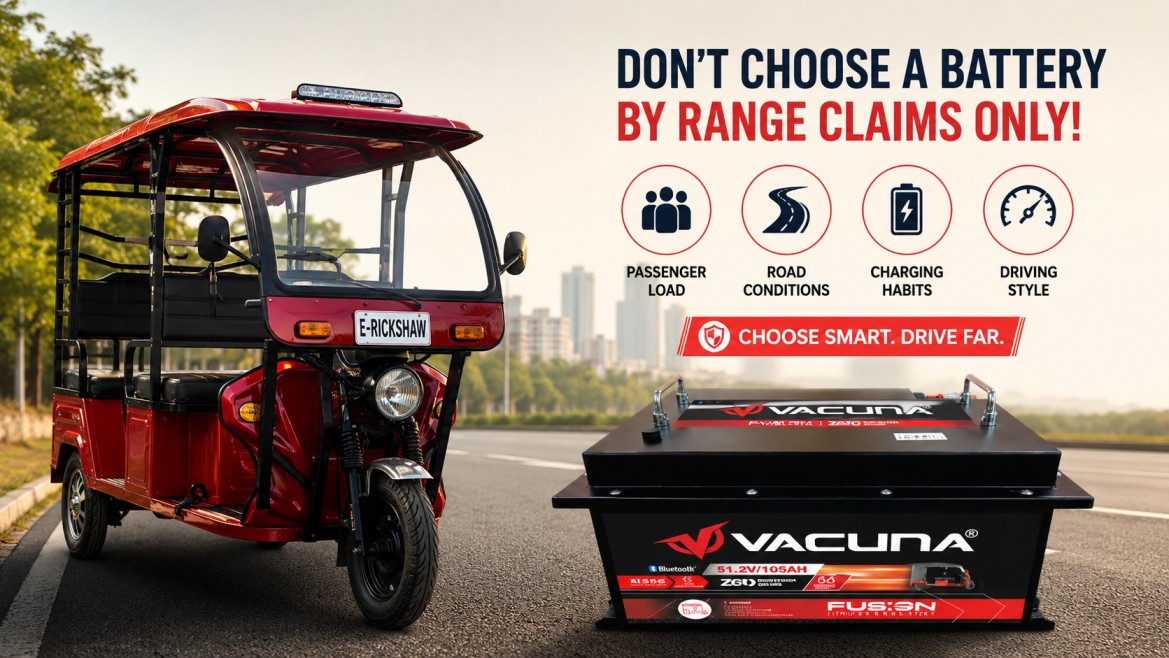
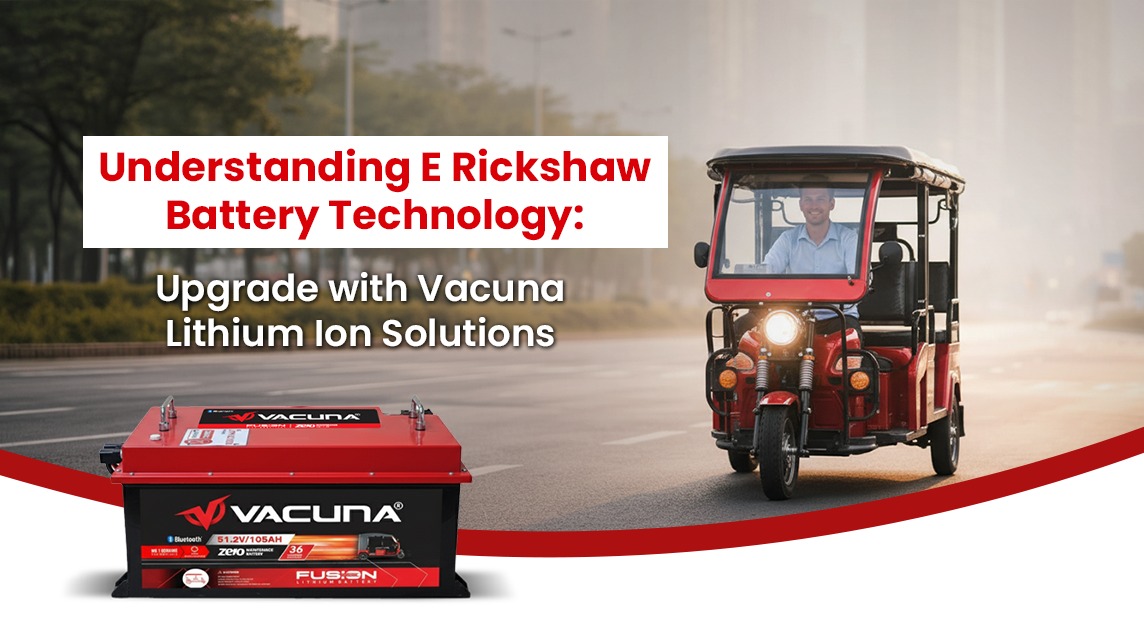
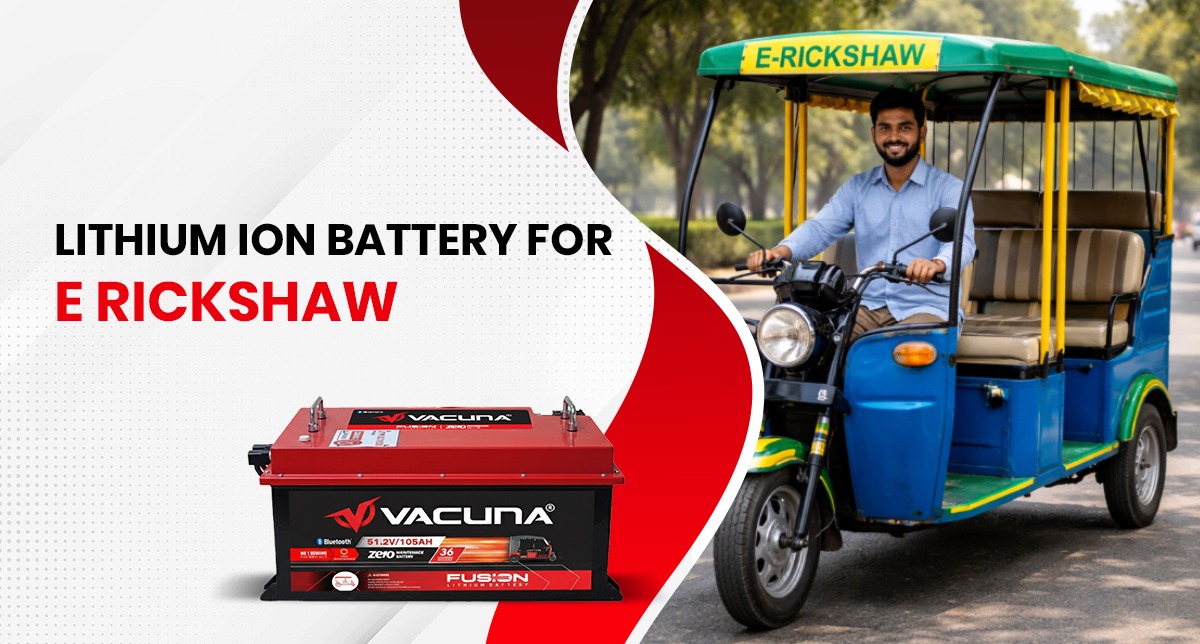
The first question that buyers must ask is where this battery will be applied. A Lithium Ion Battery for Inverter will not work in the same way a Lithium Battery for E Rickshaw would. A Lithium Ion Battery for an inverter can manage home backup requirements such as fans, lights, Wi-Fi, CCTV, and other devices, while the other one will be used on the road.
Both batteries need lithium technology but their working principle will be different. That is why the right application fit is crucial. Otherwise, the buyer will be in trouble because of backup loss, slow charging, heating, or the battery won’t even fit the requirements of the vehicle/inverter.
Every good lithium battery producer must ask some questions to give the right recommendation. What is the load? How long does the backup need to be? What kind of charger will you use? What is the charging/discharging cycle? Is it residential, commercial, or mobility battery that you want?
These questions might seem basic but they are needed to avoid mistakes. Then comes another issue – BMS or Battery Management System.
Apart from cells in the battery case, it requires smart protection features. This will enable monitoring of parameters like voltage, current, temperature, charging and discharging process. Protection against overcharging, deep discharge, short circuiting and abnormal operation is also necessary.
This becomes extremely essential for Indian conditions. Heat, variations in power supply, long hours of operation and usage in harsh conditions are common. Weak battery management system could affect performance and safety. Hence, while making comparison of lithium ion batteries manufacturers in India, the customer must find out the type of BMS protection provided and battery testing done before dispatch.
Testing cannot be ignored. The battery may appear impressive from external appearance. However, its quality will only be known from the performance test, safety checks, charging and discharge behavior, batch-to-batch uniformity. If one performs well and other shows different characteristics, there will be a loss of faith in the dealer and by the end-users.
It becomes more important for businesses. The dealer supplying lithium batteries requires consistent product. The owner of the e-rickshaw fleet requires consistent performance of the battery. The consumer at home will require reliable backup. The shop owner will require the battery to perform during power failure.
Good tests can help prevent surprises after installation. Charger compatibility is another issue that buyers overlook most of the time. It should be noted that a lithium battery cannot be charged by just any charger. The charger should be compatible with the voltage of the battery, charging current of the battery, and the battery type.
While buying a Lithium Ion Battery for Inverter, the buyer should consider inverter compatibility. While purchasing Lithium Battery for E Rickshaw, the charger and system compatibility should be considered with the battery. Good manufacturers should advice buyers about this. Warranty is another area that requires proper understanding.
A long warranty looks good, but the buyer should know about the terms of warranty. What is included and what is excluded from warranty? Is it replacement or repair? What are the documents required? How soon will the claim be processed?
It only helps if the process is very straightforward. That is when service becomes an integral part of product quality. Even the best lithium battery can require checking eventually, and the problem may arise due to the charger, connections, load, use habits, or installation. Without any additional support, the customer will consider the battery the culprit despite being wrong about it.
Vacuna treats the lithium battery as one of the components of a power supply system. The battery itself, the charger, the load, the connections, and the use habits play an important role in the overall performance.
That is why it is not wise to choose the manufacturer based on the lowest quote. The lowest quote may seem attractive at first sight. However, the battery is not suited for the application, lacks necessary protection, has confusing warranty terms, or does not provide support – the cost becomes higher later.
A good lithium battery should provide security even after the purchase. Buyers must consider these questions before deciding on the manufacturer:
Is the battery suitable for my application?
Does it come with a good BMS system?
Have safety tests been conducted on the battery?
Is the battery charged using the right charger?
What is the coverage of the warranty provided?
This will simplify the purchasing process.
Lithium batteries have become the norm in households, stores, e-rickshaws, inverters, UPS units, and even commercial back-up arrangements. The more these batteries get used, the more users require guidance, testing, proper design, and genuine assistance, and not just sales pitch.
This is how a responsible manufacturer is distinguished from a mere seller. Vacuna has made its mission quite clear: to ensure that the user selects the appropriate lithium battery arrangement according to the conditions at hand.
Because a battery should not only look impressive on paper. It should perform properly where it is actually used.
Frequently Asked Questions
1. What Should I Check Before Choosing A Lithium Battery Manufacturer?
Check the battery application, BMS protection, testing process, charger compatibility, warranty terms, service support, and product consistency.
2. Why Is BMS Important In A Lithium Battery?
A Battery Management System helps monitor and protect the battery from overcharging, deep discharge, overheating, short circuits, and unsafe working conditions.
3. Is A Lithium Ion Battery For Inverter Different From An E-Rickshaw Battery?
Yes. A Lithium Ion Battery for Inverter is mainly used for backup power, while a Lithium Battery for E Rickshaw handles road load, passenger weight, daily charging, and commercial running.
4. Can I Use Any Charger With A Lithium Battery?
No. The charger must match the battery voltage, charging current, and battery type. A wrong charger can affect charging speed, safety, and battery life.
5. Why Do Lithium Battery Prices Vary Between Manufacturers?
Prices can vary due to cell quality, BMS protection, testing standards, battery design, warranty support, service network, and application-specific build quality.
6. How Do Reliable Lithium Ion Batteries Manufacturers In India Add Value?
Reliable lithium ion batteries manufacturers in India offer proper product guidance, safety testing, compatible charging support, clear warranty terms, and service help after purchase.