Power supply variations continue across many Indian regions. Some hours remain stable, while others change without warning. This inconsistency affects different routines like work, rest, and essential tasks, and thereby creates a steady demand for backup systems that can respond quickly and reliably. In this blog by Vacuna,a trusted lithium ion battery manufacturer in India, we will explore how Vacuna’s lithium-ion inverter batteries provide consistent, long-lasting power for every household
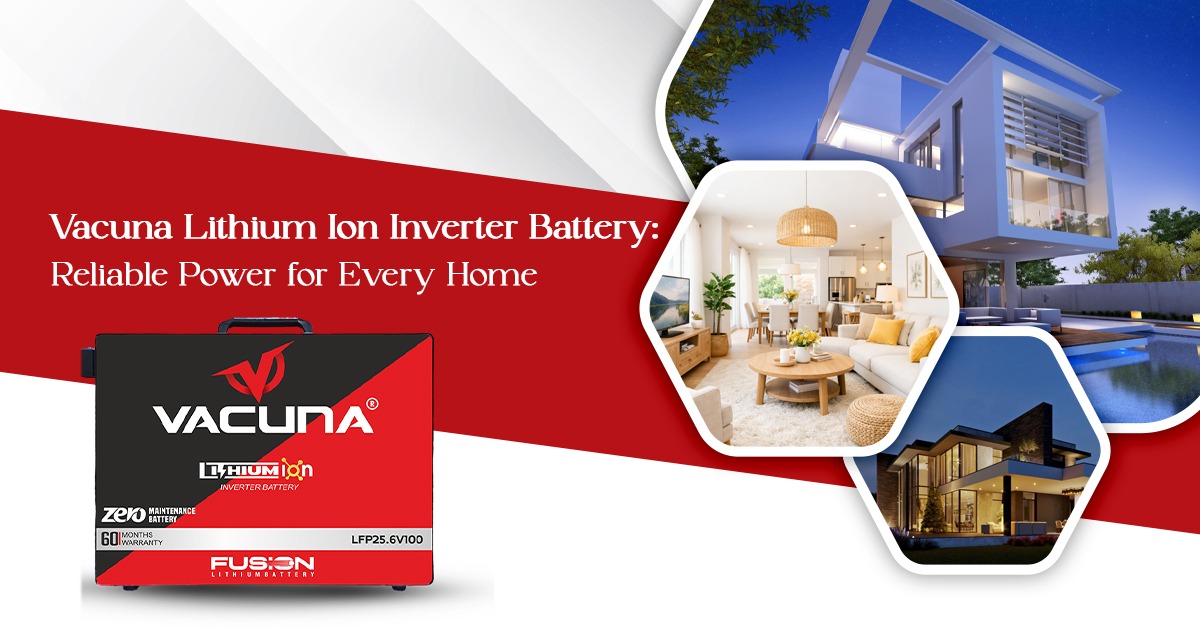
Vacuna Lithium-Ion Inverter Battery
Vacuna has introduced its new lithium-ion inverter battery at a moment when expectations are shifting. Users now look for longer life, safer operation, and simpler upkeep. The new model is designed with these requirements in mind, hereby combining performance with practical usability. It also reflects a broader transition in the backup power sector, where older systems slowly give way to advanced, maintenance-free options.
Modern Design and Smarter Performance for Every Space
Across homes, offices, and shops, the shift toward lithium technology is becoming more visible. Traditional batteries remain familiar, yet they require frequent checks, longer charging time, and regular servicing. Vacuna’s new inverter battery adopts a different approach. It uses high-quality lithium cells managed by an intelligent BMS that oversees temperature, charging patterns, and safety functions. This structure, meanwhile, supports smoother and more predictable performance.
One practical benefit is the compact and lightweight design. Users often struggle with bulky batteries that occupy too much space. The newer lithium model reduces this concern, thereby offering strong power backup in a smaller footprint. Such advancements reflect the growing expertise of a leading lithium ion battery manufacturer in India, where products are shaped according to regional electricity behaviour and user expectations.
Features That Strengthen Long-Term Value
Vacuna has focused on efficiency and user comfort. Some features stand out clearly:
• Faster charging, useful for areas with brief electricity windows
• Longer backup hours for essential appliances
• Zero maintenance needs throughout its lifespan
• Built-in protection against overcharging and deep discharge
• A lighter structure that is easier to place indoors
• Compatibility with newer inverter systems
As reliance on electronic devices increases, these features further support everyday routines. A trusted lithium ion battery manufacturer in India ensures that such systems are prepared for frequent usage, temperature variations, and inconsistent grid supply.
Financial Efficiency Over the Years
While the initial investment in lithium batteries may seem higher, their long-term behaviour tells a different story. They operate with less energy loss during charging, thereby lowering electricity consumption. They do not need water topping or repeated servicing, which in turn reduces maintenance cost. Their lifespan extends across more cycles, offering steady performance for several years.
Vacuna’s new model follows the same pattern, providing consistent output even after extended use. For households, workplaces, and small commercial units, this reliability becomes a meaningful advantage. These qualities reflect the technical knowledge of an experienced lithium ion battery manufacturer in India, especially in creating products suited for long-term and high-frequency operation.
Supporting Modern Digital and Practical Needs
Today’s homes depend heavily on uninterrupted power for communication, study, work, and entertainment. Sensitive devices like computers and medical equipment function better when backed by stable voltage. Lithium inverter batteries support such requirements by offering smoother transitions when the power supply drops. Meanwhile, their efficient energy storage helps reduce wastage, thereby contributing to broader sustainability efforts.
Conclusion
Vacuna’s lithium-ion inverter battery enters the market at a time when dependable backup power has become essential rather than optional. With higher energy demands and changing user habits, the shift toward advanced lithium technology appears both timely and practical. The product offers a balanced mix of durability, safety, and consistency- qualities supported by a capable lithium ion battery manufacturer in India. Users looking for a more dependable system may hereby find this solution suitable for today’s and tomorrow’s power needs.
FAQs
1. How long does a Vacuna lithium-ion battery last?
It provides reliable backup for several years, with multiple charge-discharge cycles depending on usage.
2. Is it safe for sensitive devices like computers and medical equipment?
Yes. The intelligent BMS keeps voltage stable and protects devices from overcharging or sudden drops.
3. Does it require regular maintenance?
No. Vacuna lithium-ion batteries are maintenance-free, unlike traditional lead-acid options.
4. Can it handle frequent power outages?
Yes. These batteries are designed for repeated use and perform reliably even with inconsistent electricity supply.
5. Where can I buy Vacuna batteries?
They are available through authorized dealers and online platforms. Visit the official Vacuna website to find a dealer near you.