Understanding the difference between Starter & Deep Cycle Battery

There are many types of lead acid batteries with varying design and constructions as per the applications. Out of the many types, the batteries can be grouped as starter and deep cycle batteries. In this blog we are going to outline the difference between both of them. 

Difference between Starter & Deep Cycle Battery:

1.Design and Construction:

Deep Cycle Batteries: 

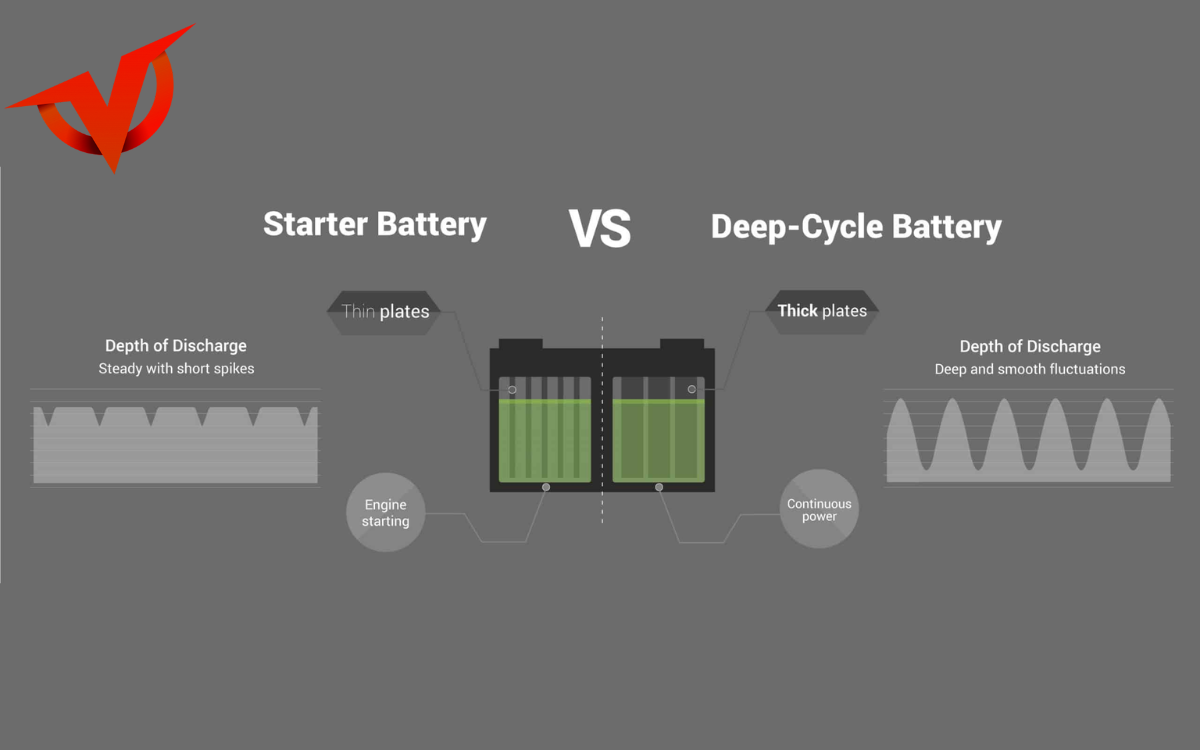
Deep cycle batteries are mostly used in applications where they have to constantly deliver a steady amount of power for hours or extended periods of time. Hence they are designed to be sturdy with  thicker plates and denser active material, that helps them to undergo repeated charging and discharging cycles with ease. Deep cycle lead batteries can come in flooded, tubular and VRLA designs with their individual benefits. Vacuna is a leading battery manufacturer in India, offering high quality deep cycle batteries for inverter and solar applications.  We have also spread our wings across the globe and are offering batteries to countries like UAE also. If you are looking for Best Inverter Battery in UAE, you can go for Vacuna inverter batteries.

Starter Batteries: 

Starter batteries are used to start the vehicles where they have to deliver a high amount of power for short durations. These batteries are designed with thinner plates which increases their surface area so that the high burst of energy can be delivered to start the engine of the vehicle. Hence they are also known as SLI or starting, lighting and ignition batteries.

2.Power Delivery:

Deep Cycle Batteries: 

Deep cycle batteries offer constant power flow for longer durations. This is suitable for applications like running appliances, fans, motors, lights and some EVs. These batteries discharge power over the period of time with sustained rate.

Starter Batteries: 

These batteries deliver a quick and high amount of current that is required to power the engine of the vehicle. Once the engine gets started the battery is recharged by the alternator.

3.Discharge and Recharge Cycles:

Deep Cycle Batteries: 

Since deep cycle batteries are built to handle deep discharges and repeated charge and discharge cycles, they can be discharged to around 50% or lower, as per the battery specifications, before being recharged.

Starter Batteries: 

Starter batteries are designed to offer high bursts of power in short durations and cannot handle deep discharges. They undergo shallow discharging of up to 20% before being recharged.

4.Applications:

Deep Cycle Batteries: 

Deep cycle batteries are used in applications where sustained power delivery is required for e.g. inverter batteries to run appliances, fans, lights etc., golf carts, marine vessels, solar applications, EVs like E-rickshaw.

Starter Batteries: 

Starter batteries are used in vehicles like cars, trucks, tractors, bikes, buses etc. Their main purpose is to bring the engine to life with their cranking power.

Summary:

Every battery is designed according to the purpose it has to serve. Hence they are designed differently & optimized for their specific function. Always go for batteries that are durable, efficient and long lasting. 
Vacuna is a leading battery manufacturer in India offering high quality batteries for inverter, solar and vehicle applications. We also deliver energy solutions worldwide including to countries like UAE and Middle Eastern countries. If you are looking for the Best Inverter Battery in UAE, you can go for Vacuna. We provide reliable inverter batteries with deep cycling capability, low maintenance and higher backup.

Choosing the Perfect E-Rickshaw Battery

Welcome to Vacuna’s comprehensive guide on choosing the ideal battery for your e-rickshaw! As a leading e-rickshaw battery manufacturer in India, Vacuna understands the critical role that batteries play in ensuring optimal performance and efficiency. In this article, we will walk you through the key factors to consider when selecting the right battery for your e-rickshaw, empowering you to make an informed decision.

Understanding the Needs of Your E-Rickshaw 

Before diving into the battery selection process, it’s essential to assess the specific requirements of your e-rickshaw. Consider factors such as the vehicle’s weight, motor power, driving range and intended usage. A thorough understanding of these aspects will help you determine the battery capacity, voltage and technology best suited for your e-rickshaw.

Battery Technologies: Comparing the Options

In today’s market, e-rickshaw batteries predominantly come in two popular technologies: lead-acid and lithium-ion. Let’s explore the pros and cons of each:

-Lead-Acid Batteries: 

These batteries are known for their affordability and reliability. They have a lower upfront cost and are suitable for shorter commutes. However, they require regular maintenance and are heavier than lithium-ion batteries. But still because of trusted technology and overall benefits make them a popular choice for e-rickshaw owners.

-Lithium-ion Batteries: 

Lithium-ion batteries offer higher energy density, longer cycle life and faster charging times. Although they have slightly longer life but are way too expensive than lead acid batteries. 

Matching Battery Capacity and Voltage 

To ensure optimal performance, it is crucial to select a battery with the right capacity and voltage for your e-rickshaw. Higher capacity batteries allow for longer driving ranges, while voltage compatibility with the vehicle’s motor is essential for seamless integration. Vacuna’s expert technicians can assist you in determining the ideal battery capacity and voltage based on your e-rickshaw specifications.

Considering Maintenance and Warranty 

Maintenance requirements and warranty terms are important considerations when selecting an e-rickshaw battery. Assess the maintenance procedures, such as watering requirements for lead-acid batteries or periodic checks for lithium-ion batteries. 

Additionally, choose a battery manufacturer like Vacuna that offers comprehensive warranties, ensuring peace of mind and support for any potential issues.

This article is a guide on choosing the right battery for e-rickshaws, provided by Vacuna, a leading battery manufacturer in India. It explains the importance of understanding the e-rickshaw’s specific needs, compares lead-acid and lithium-ion battery technologies, emphasizes the significance of matching battery capacity and voltage and considers maintenance and warranty factors.

Trust Vacuna to deliver the perfect e-rickshaw battery that ensures a smooth and efficient ride.

Decoding Sustainability: Lead Acid vs. Lithium-Ion Batteries

Inverter batteries are essential for ensuring uninterrupted power supply in homes, especially during frequent power outages. When it comes to choosing the right battery technology, sustainability plays a crucial role. In this blog, we, Vacuna, a leading battery manufacturer in India, delve into the sustainability aspects of lead-acid and lithium-ion batteries, helping you to make an informed decision in choosing the right inverter battery for your home.

1. Recyclability: Lead Acid vs. Lithium-Ion Batteries

Lead acid batteries have a relatively high recyclability rate. The lead and plastic components can be effectively recycled and reused in the manufacturing of new batteries. Battery recycling facilities extract lead, neutralize acid and recycle the plastic casings. This recycling process significantly reduces the environmental impact of lead acid batteries.

Lithium-ion batteries, on the other hand, pose more significant challenges in terms of recyclability. While they contain valuable materials like lithium, cobalt, and nickel, the current recycling infrastructure is still developing. The complexity of lithium-ion battery recycling lies in the extraction and separation of these materials, which requires specialized processes. 

2. Manufacturing Process: Lead Acid vs. Lithium-Ion Batteries

The manufacturing process of lead acid batteries involves extracting and refining lead, which requires substantial energy and resources. The lead is then used along with sulfuric acid and other materials to form the battery’s components. While lead is a readily available resource, its extraction and processing can have some environmental impacts.

On the other hand, the manufacturing process of lithium-ion batteries is more complex and energy-intensive compared to lead acid batteries. It involves extracting lithium, cobalt and other minerals from the earth, which can have environmental consequences if not managed sustainably.

3. Energy Efficiency : Lead Acid vs. Lithium-Ion Batteries

Lead acid batteries have lower energy efficiency compared to lithium-ion batteries. They lose a significant amount of energy during charging and discharging, resulting in lower overall efficiency. However, improvements in these batteries leading to their upgraded forms are making them more reliable and efficient.

On other hand, Lithium-ion batteries are known for their higher energy efficiency. They can store and deliver energy more effectively, resulting in reduced energy wastage and improved overall efficiency.

2. Environmental Impact : Lead Acid vs. Lithium-Ion Batteries

Lead acid batteries contain lead and sulfuric acid, which can be hazardous if not properly handled or disposed of. Inadequate recycling or improper disposal of lead acid batteries can lead to soil and water contamination, posing risks to ecosystems and human health. However, stringent regulations and increased awareness have significantly improved the management of lead acid battery waste.

But, environmental impacts of lithium-ion batteries primarily stems from the extraction of raw materials and the disposal of used batteries. Mining operations for lithium and other minerals can have detrimental effects on ecosystems and local communities. Additionally, if not recycled properly, lithium-ion batteries can release harmful chemicals into the environment. 

Conclusion:

When it comes to sustainability, both lead acid and lithium-ion batteries have their pros and cons. Lead acid batteries have a well-established recycling infrastructure and can be recycled efficiently, whereas lithium-ion batteries pose challenges in terms of recycling but offer higher energy efficiency. Manufacturers like Vacuna are actively working towards improving the sustainability of battery technologies by investing in research and development, exploring alternative materials and implementing efficient recycling practices. As a consumer, it is crucial to consider factors such as recyclability, manufacturing processes, energy efficiency and environmental impact when choosing an inverter battery for your home.

Follow Us:

Facebook

Instagram

Twitter